a modern Narnia in Almhof Schneider
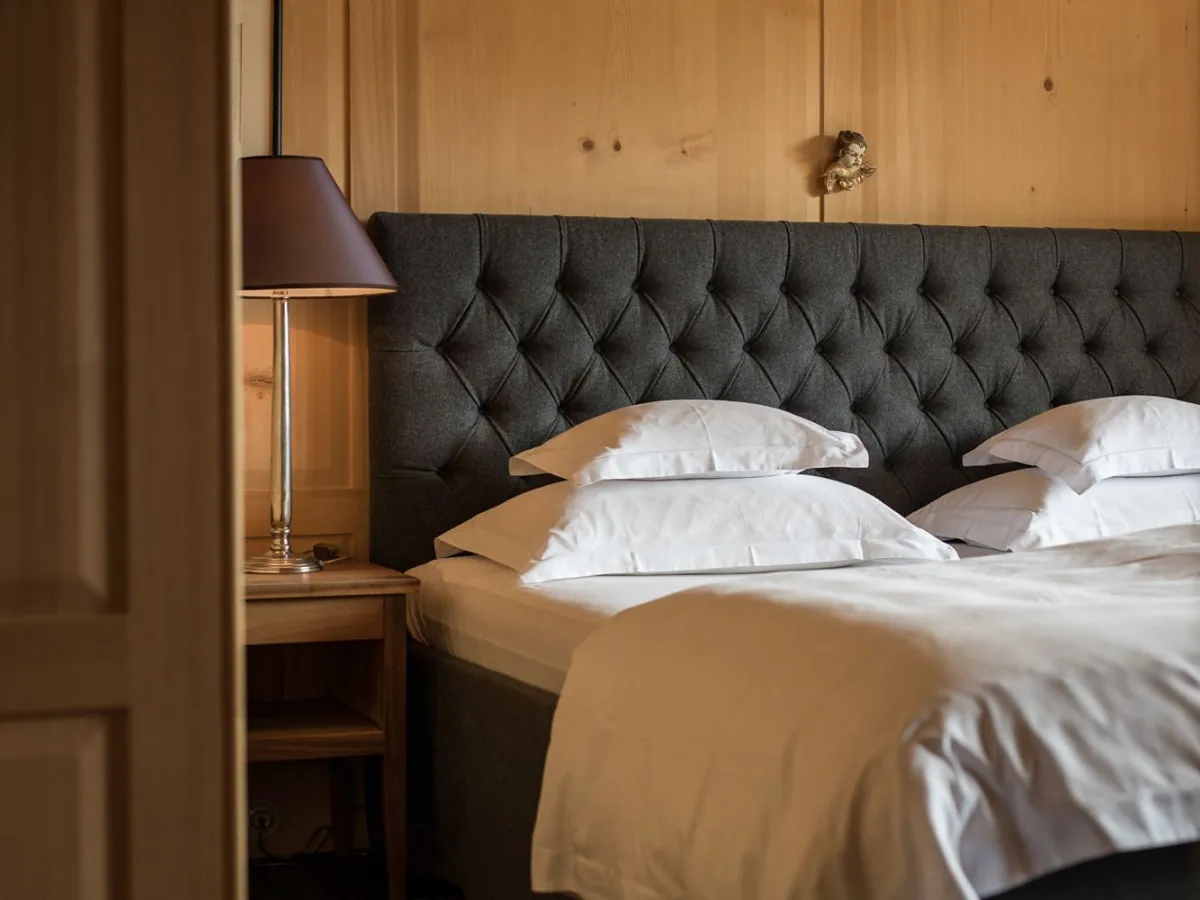
As you walk into Almhof Schneider, you are greeted by one hundred faces. Burrowed into the heart of Lech—one of Austria’s most storied ski-towns—the hotel’s foyer invites guests and passersby to enjoy a series of photographs lining deep blue walls.
The portraits are captured by Berlin-based photographer Konrad Rufus Müller and depict members of Lech’s community over nearly three decades. The series begins in 1994 with Maria Schneider at 98 years old and ends in 2022 with her great-grandson, Luis. Maria’s grandson Gerold, who now runs the Almhof Schneider along with his wife Katia, commissioned the project. They are the fourth generation of hoteliers, but the family have resided on these pastures since the 14th century. Conserving the past is vital to the business; it is at the core of every change the hotel undergoes.
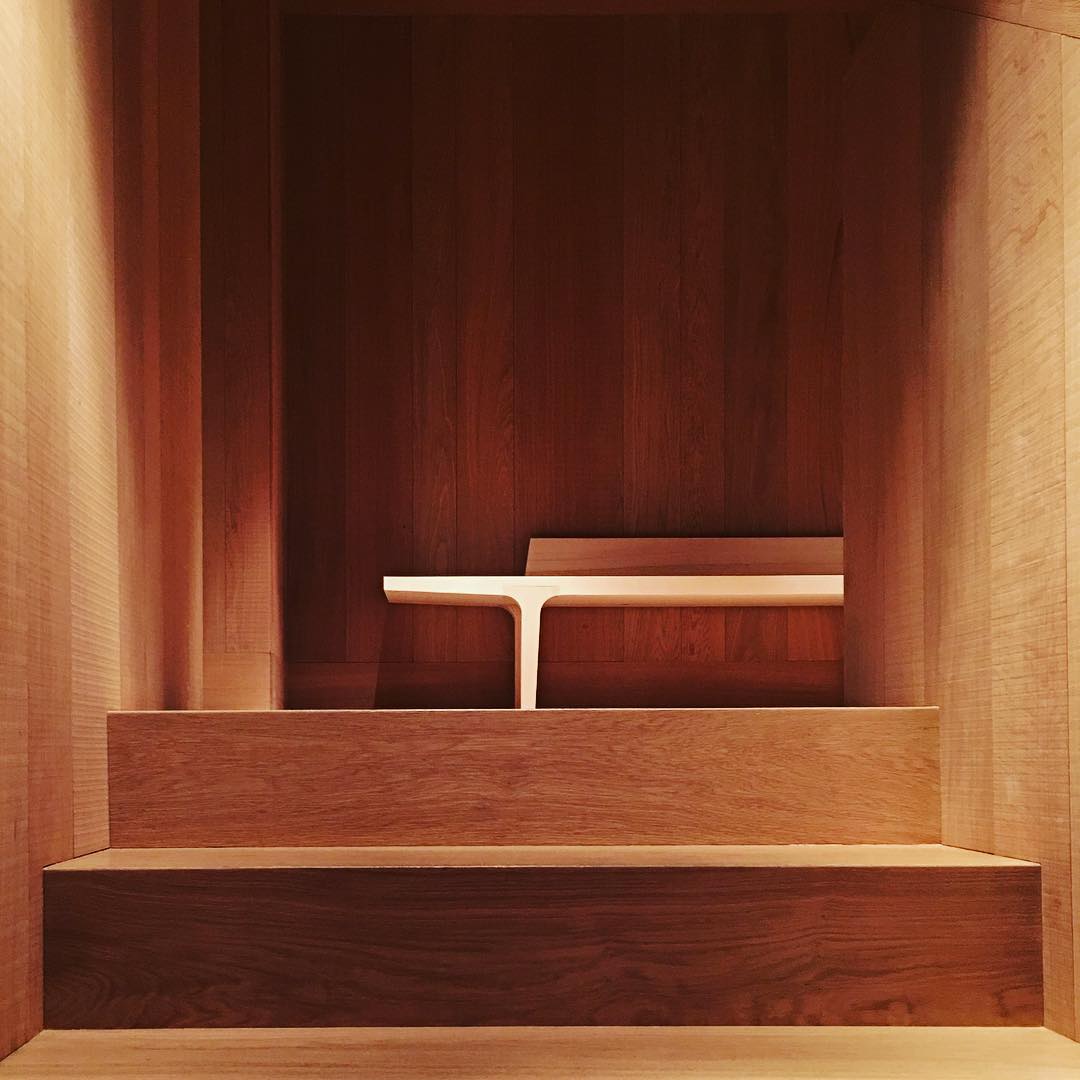
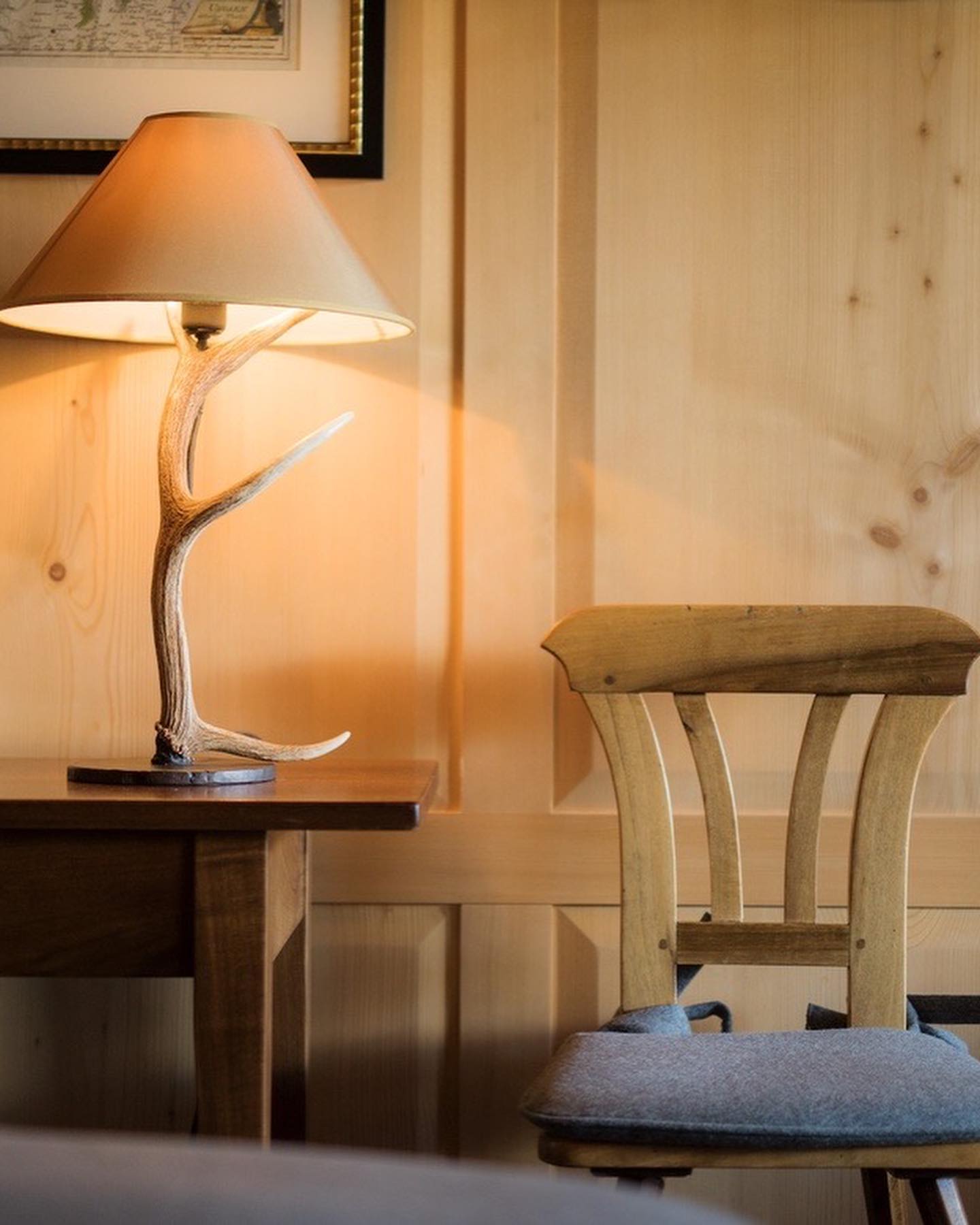
Thirty years into leading the brigade, Gerold has implemented plenty of new ideas both architecturally (an irresistible spa inspired by ancient wellness and a conceptual garage devised by Japanese designer Shinichiro Ogata) and philosophically (a move away from dimly lit Alpine interiors fashionable in the 80s and towards light-filled spaces that bring life to the rooms’ textures). Despite this, traditions live on. “There is no such thing as the old Almhof,” Schneider affirms, “every alteration has been a fluid change and not a radical one.” When the winter season comes to a close, the hotel does not go into hibernation. “We go from season to construction and construction to season.” The summer months are a time of metamorphosis; every new development is a direct continuation of what already exists.
Gerold grew up at Almhof; the hotel has always been his home, and it is important that guests feel equally at ease. A staggering 90% return each year, a testament to the Schneiders’ approach to hospitality: unforced and unfailing. It is therefore surprising that Gerold and his wife never intended to become Almhof’s principal hosts. Both were pursuing careers in architecture when a series of unexpected events led them back to Lech.
Their plans focus on maintaining Almhof’s success whilst recognising the need for generational shifts. Satisfying die-hard returners aligns with attracting new clientele. “People are so attached to spaces that you have to make each change sensitively,’” insists Gerold. Katia then chimes in. The pair bounce off one another, giving further form to the other’s idea. And this is precisely how they cooperate professionally: with forethought, curiosity and support. “Our guests have a Sehnsucht,” she says. It is a tricky word to translate but it encapsulates a pining for something familiar. This sense of belonging, which Almhof engenders, demands respect. As the hotel has passed from one pair of Schneider hands to the next, the opportunity for sensitive change is made easier by the overlapping (and sometimes clashing) of ideas. Gerold collaborated with his mother, Hannelore, who trailblazed in her prime. She and her husband steered Almhof beyond the spartan sport hotel of the 1920s, when alpine skiing took off, transforming the business into one of the most attractive destinations in the wide-reaching area.
Her son has carried this torch since his mid-20s. Maintaining desirability is paramount, but this does not happen by abandoning roots. Projects like their Sonnenhof, a private chalet that can be rented in exclusivity, exemplify extreme quality and paired back living. The structure has existed since the days of the earliest settlements in Lech. Cutting into its wooden walls revealed origins in the 1300s, when inhabitants were living there in intense poverty. It has been a conscious decision to preserve its integrity by ensuring that these humble beginnings are palpable. Original features of the Sonnenhof remain, discerningly blended with modern comforts.
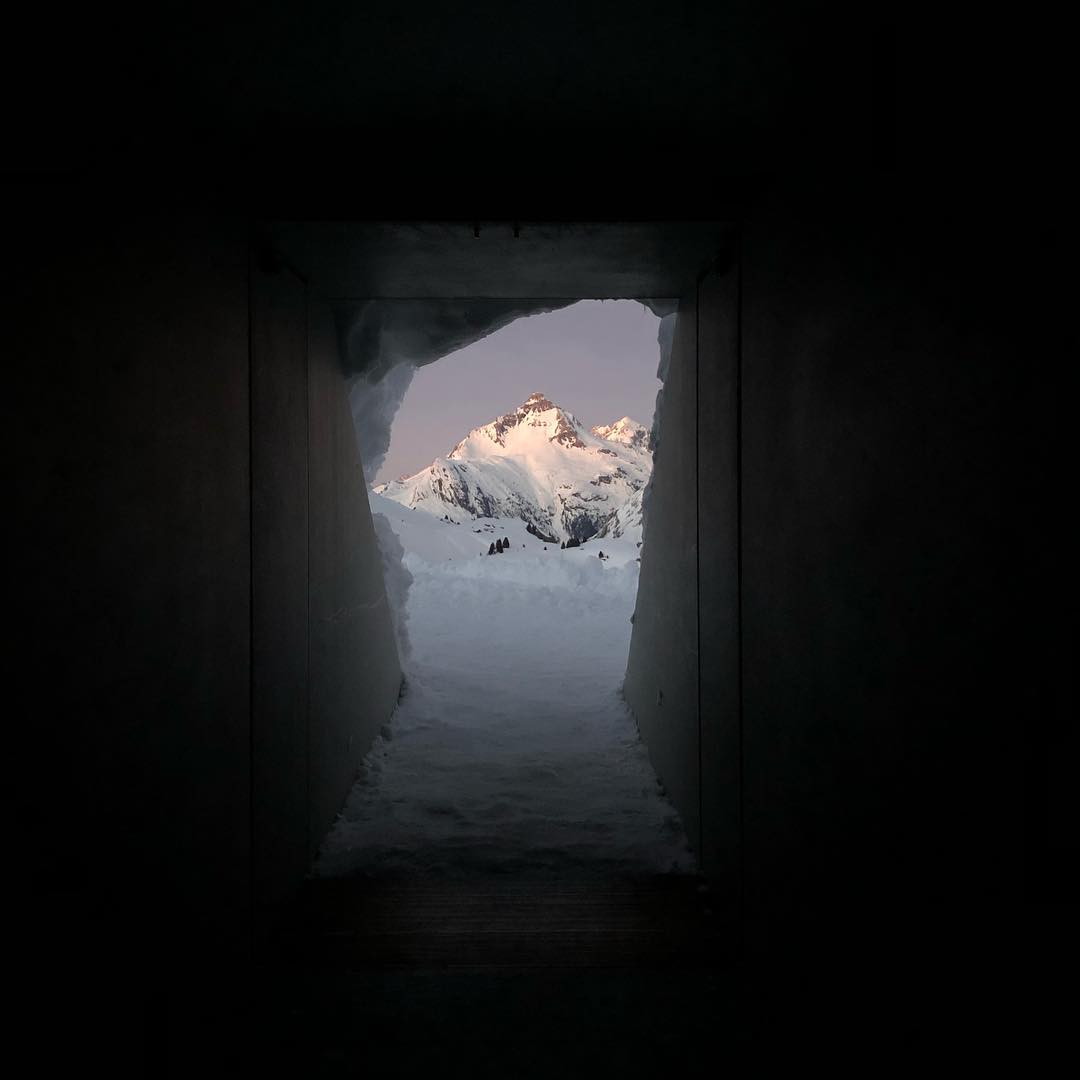
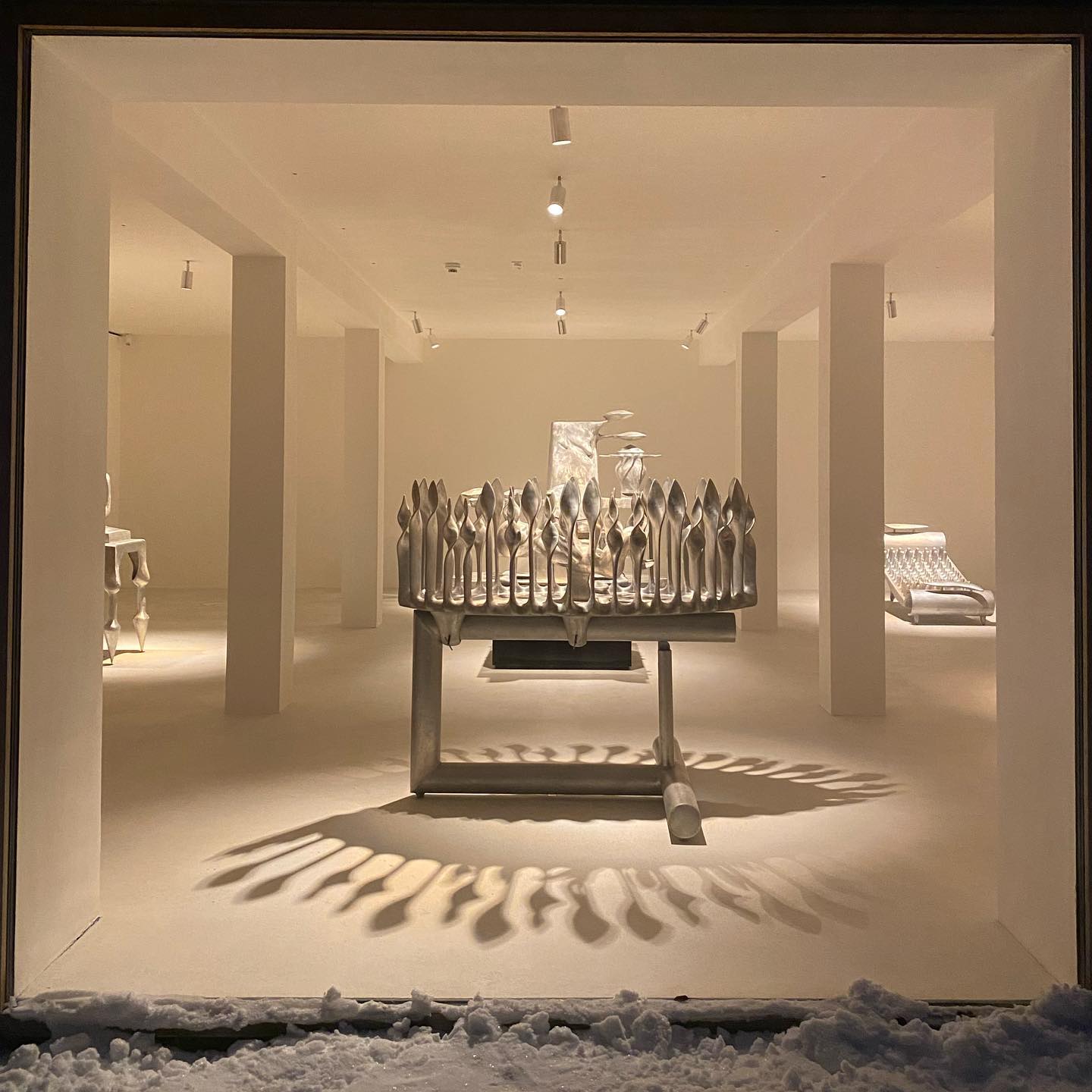
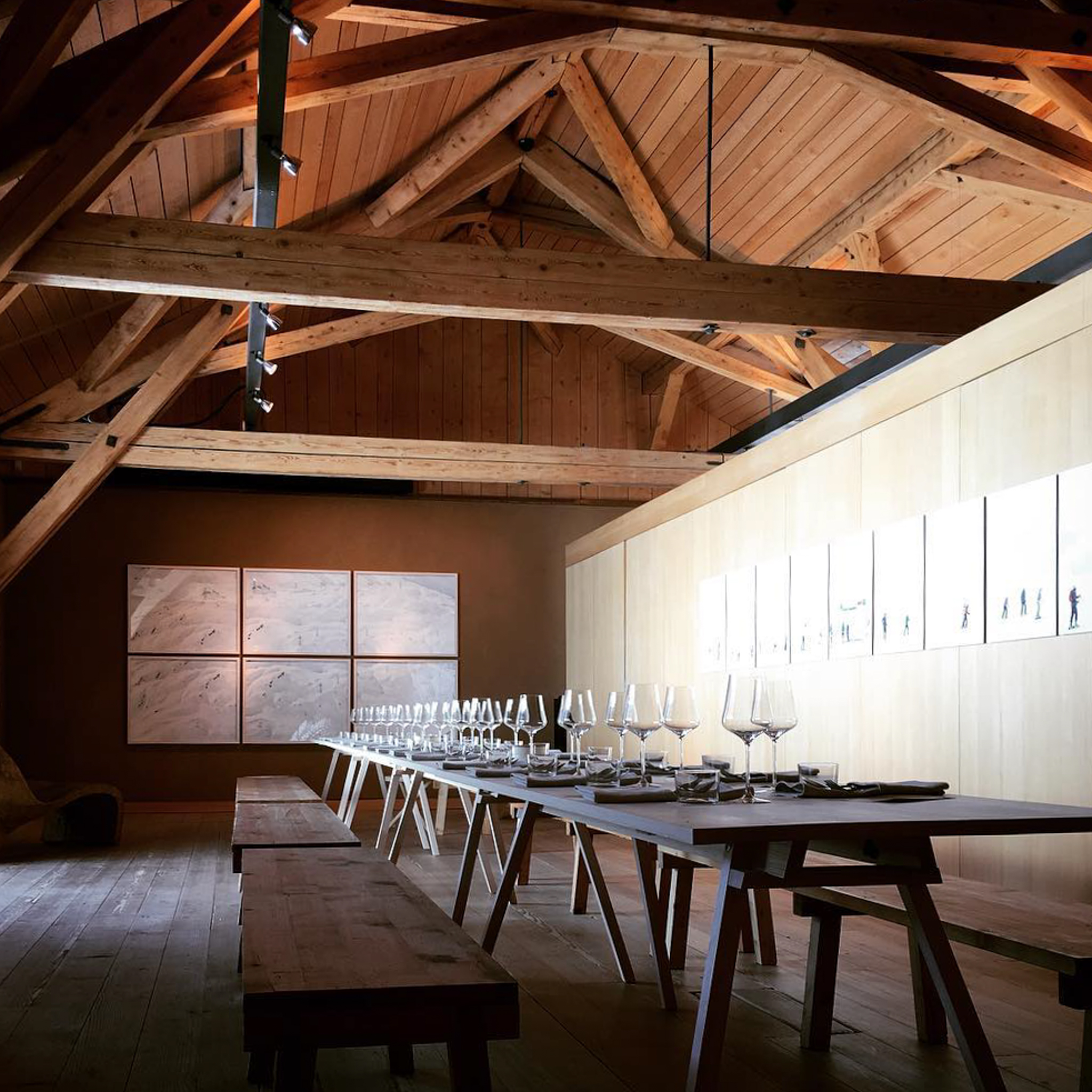
Although they sacrificed city buzz for rural Lech’s community of 1,500 inhabitants, the couple didn’t stray from their old path. Rather, they have merged it with the newly forged one, connecting their artistic and academic passions with running the family business. Commissioned works and site-specific pieces are dotted throughout the hotel’s interiors. Its trattoria, Wunderkammer, whose walls are painted by Austrian artist Paul Renner and replicate a cabinet of curiosities, is one of the most striking examples. Down the road, in the picturesque village of Zug, an exhibition space showcases artists inspired by the alpine surroundings. The couple’s treasured barn, the allmeinde commongrounds, is a sanctuary of learning, reflection and artistic exchange. An extensive library is open to the public, and living quarters are often filled with artists in residence.
Art and design are at the forefront of Gerold and Katia’s iteration of Almhof. Yet this is not an ‘art hotel.’ The term is too limiting. Their aim is to enrich an area full of potential beyond its defined borders. Lech is a venerated ski destination, yes, but is so much more than that. “We have to create reasons for being here beyond just skiing,” they say. Given the small population, everyone has an impact on their ecosystem. Gerold and Katia’s contribution lies in, among other things, their artistic network. Though, they stress that the destination is captivating in its own right. “The silence of the snow, the air, the horizons,” Katia sees how the simple beauty of a winter’s day is enough to want to escape to Lech.
When asked what their favourite space at Almhof Schneider is, Gerold and Katia don’t have a precise answer. What delights them is seeing the hotel’s various phases of life rolling seamlessly onward. The pool, built in 2004, flows perfectly with the spa, inaugurated in 2016. The dining room was completed in 2005 and the restaurant in 2008, but nothing looks outdated, out of place or outlandish. Gerold finds deep satisfaction in the concept of timelessness. He has achieved his goal if he can come back to a space 20 years after realising it and still feel happy with the design. For Katia, joy comes from Almhof’s total harmony. If guests ask for a tour, no stone is left unturned. The hotel’s behind-the-scenes are as pristine as its centre stage. Ask to see the laundry room and not a single bedsheet will be out of place.
It’s a competitive world, and the family is up against changing trends and attitudes, as well as neighbouring hotels and other coveted ski resorts. So why do so many guests return to Almhof? “You can’t always compete with real estate, but you can compete with service.” The quality of Almhof’s hospitality is paramount to its overall success. It feels subtle and natural, but nothing is accidental: even the background music has been painstakingly selected, tailored to each room and every time of day.
“The hotel is a strange creature,” says Gerold, “it’s a hybrid.” Almhof Schneider is the very picture of tradition in transition; old and new are inextricably linked. This paradox means the work never stops. It is easy to be charmed by the fairytale image of a family hotel passed down through generations, but the Schneiders do not rest on their laurels. They balance the teetering scales of familiarity and innovation, of award-winning management and effortless hospitality, of international artistic exchange and local community. The hotel has come a long way in the last century, and more is yet to come. At the heart of it all lies one principle: the Sehnsucht for Almhof Schneider must live on.
Antonia Thomas
If you ever get the chance to travel with Antonia – particularly to Italy – consider yourself lucky. Relaxing trips are not in her holiday vernacular; instead, she uses her time off to explore deeply, to understand a place to its core. In short, she loves getting “stuck in”. A writer and Villa Specialist at The Thinking Traveller, Antonia’s always unveiling undiscovered gems and revealing untold stories. With a camera, a book, a pen and an overflowing suitcase in tow, this Londoner’s ready to dive into life in Italy or India, Costa Rica or Colombia. Come to Antonia for the greatest of tips for galleries, great wine and gustatory delights.