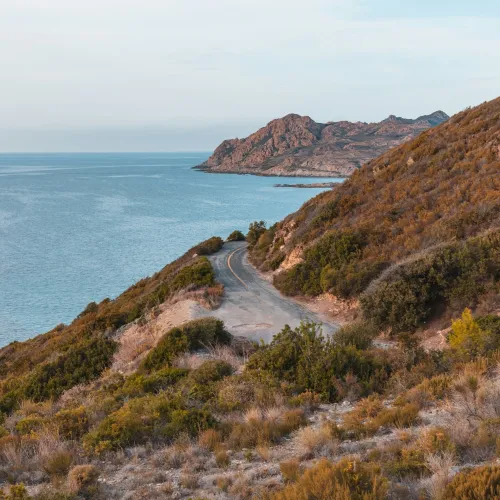
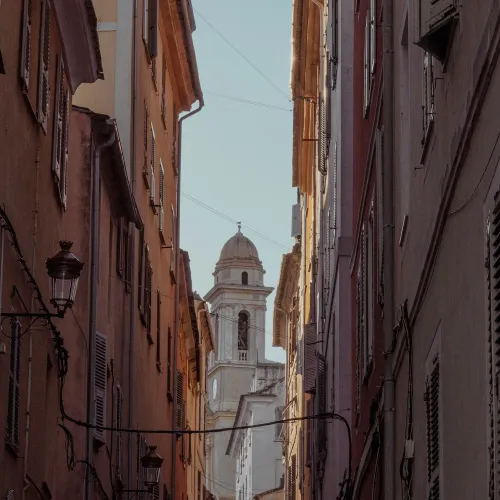
The south of Corsica contains the island's most celebrated beaches and its most dramatic coastline, and makes no apology for either. Palombaggia is one of those places where the photographs are entirely accurate and the reality somehow still exceeds them: pink granite boulders, pines growing sideways over white sand, water that cycles through four shades of blue depending on the depth. Bonifacio sits on chalk cliffs above a narrow strait, its citadel hanging over the sea with a certain theatrical confidence. Ajaccio, Napoleon's birthplace, is a proper Corsican city with a covered market, excellent charcuterie, and the unhurried atmosphere of somewhere that does not need to impress anyone. The Calanques de Piana, rock formations of deep red porphyry above the Gulf of Porto, are among the most extraordinary landscapes in the Mediterranean. Hire a car, drive slowly, and stop often.
Most people land in the south and stay there. Those who head north find something considerably harder to leave. The granite peaks of the interior rise to nearly 2700 metres and hold snow well into June, while the Castagniccia chestnut forest covers the eastern hills in a canopy so dense the villages beneath it feel genuinely remote. The Cap Corse peninsula curls into the Mediterranean like a finger pointing north, with fishing ports, Genoese towers, and a coastal path that is best walked over two or three days with no particular hurry. Bastia is a working port city that has no interest in performing for visitors and is considerably more interesting for it. The Patrimonio wine appellation in the north produces some of the most characterful bottles on the island. Haute-Corse is Corsica before the beach crowds arrive and after they leave.