the Scottish claymakers feeding Skye’s restaurants
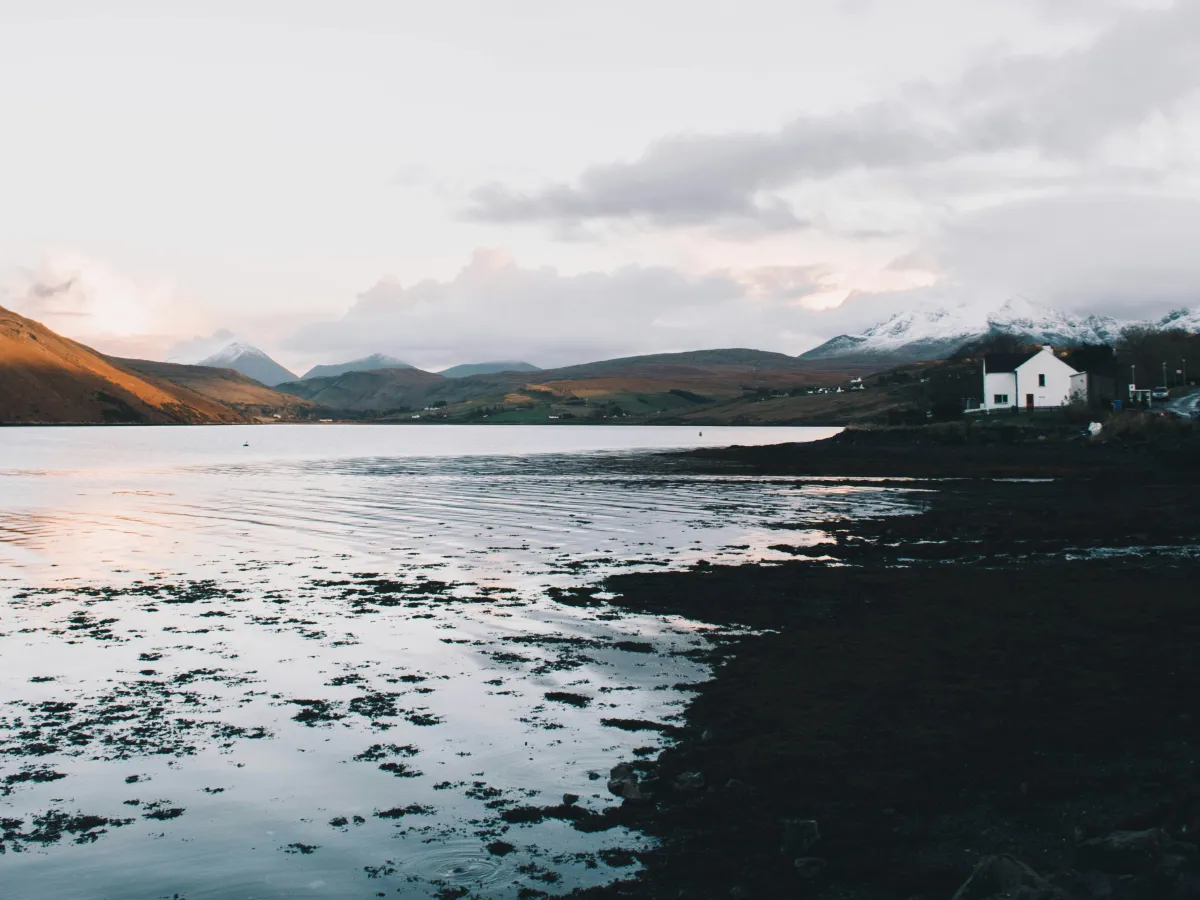
On the wild, windswept Isle of Skye, claymakers and chefs are turning to the same rugged source for inspiration and ingredients: the Hebridean landscape itself.
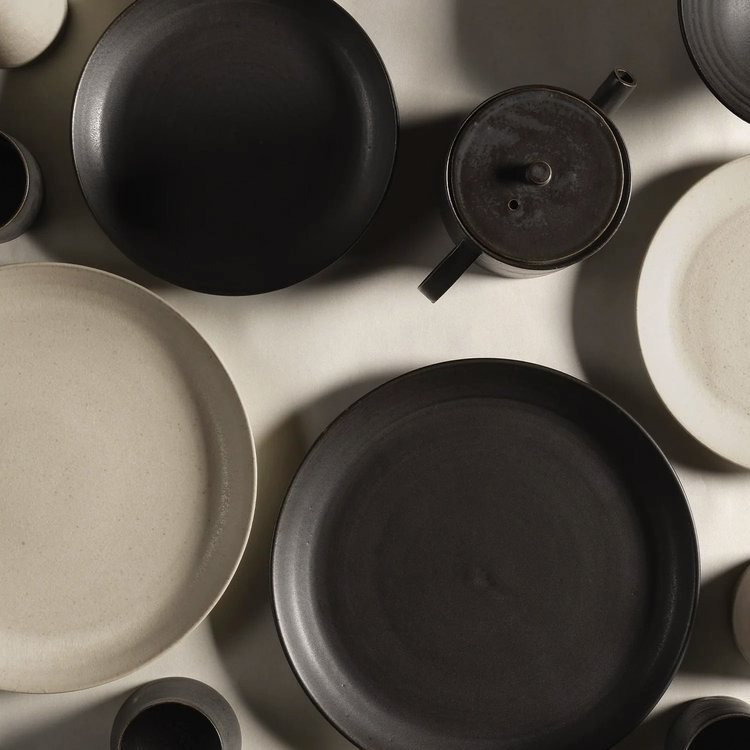
In kitchens tucked behind croft houses and weather-battered studios overlooking the Outer Isles, a new generation of culinary and ceramic artisans are drawing on the soil, seaweed, and clay underfoot. Dishes are plated on locally thrown stoneware with glazes echoing peat-stained streams and coastal lichen; while menus are steeped in foraged kelp, wild sorrel, and fish pulled from icy waters that morning.
Edinbane Lodge
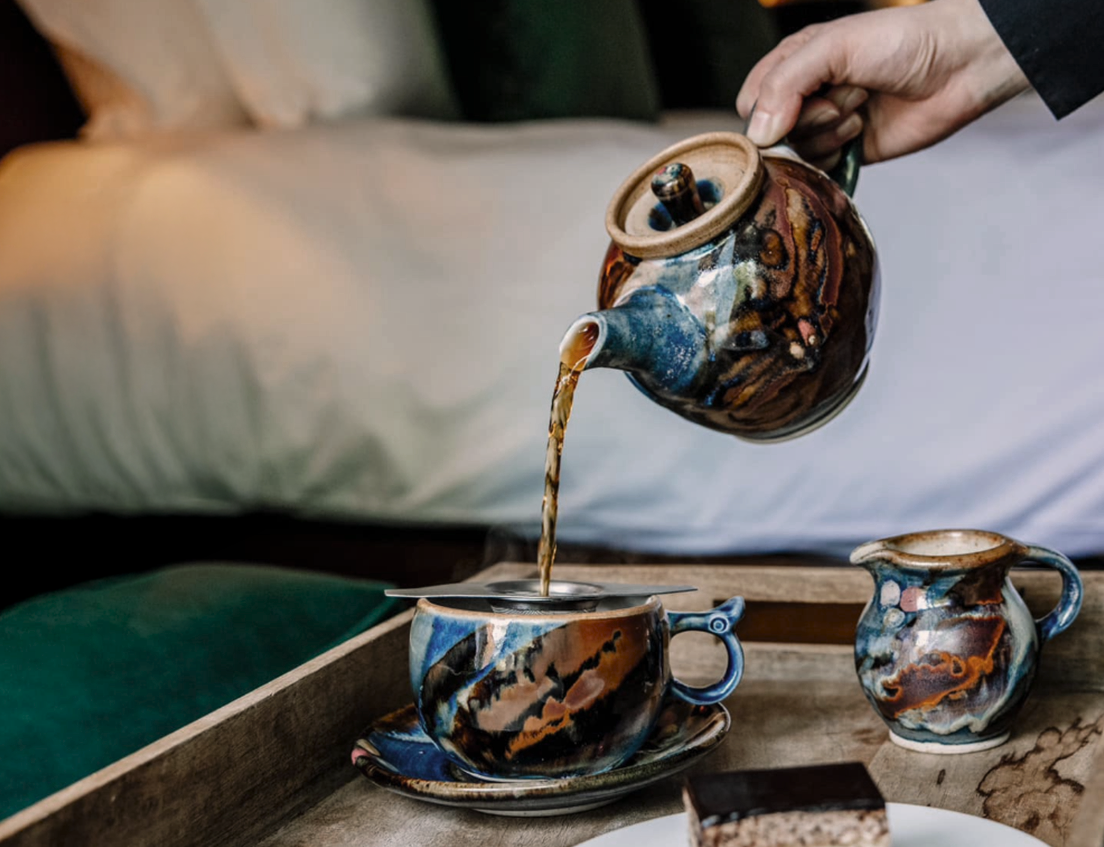
In the quiet crofting village of Edinbane on Skye’s western edge, set just a hundred yards apart, Edinbane Lodge, a refined restaurant-with-rooms run by chef Calum Montgomery, and Edinbane Pottery, founded by ceramicist Stuart Whatley, share both proximity and a philosophy. That the land itself – its clay, its colours, its contours – should be savoured in each bite and on every vessel.
“Serving our food on Edinbane Pottery allows us to bring our philosophy to life,” says Montgomery. “Every plate, bowl, or vessel carries the same essence of place as the ingredients on it.” His plates don’t just hold food, they frame it. A meadowsweet and strawberry pudding arrives on what he calls an “upside-down plate,” an elevated ceramic canvas echoing the tones of Edinbane’s wildflower meadows. A whisky-jelly Falasgair is cradled in a hand-thrown bowl glazed in shifting blues – a nod, he says, to the “crisp early spring skies over Skye.”
Across the road, Stuart Whatley still draws on memories of growing up on the nearby island of Pabay, where childhood days were spent playing with boulder clay his father dug from a drainage ditch. “That island life – weather-beaten, vivid, full of wildlife – it all finds its way into the work,” he says. The pottery studio was originally built in the Gardener’s Cottage behind what is now Edinbane Lodge, and its pieces are still fired using ash from local wood and glazes made with basalt dust from nearby quarries.
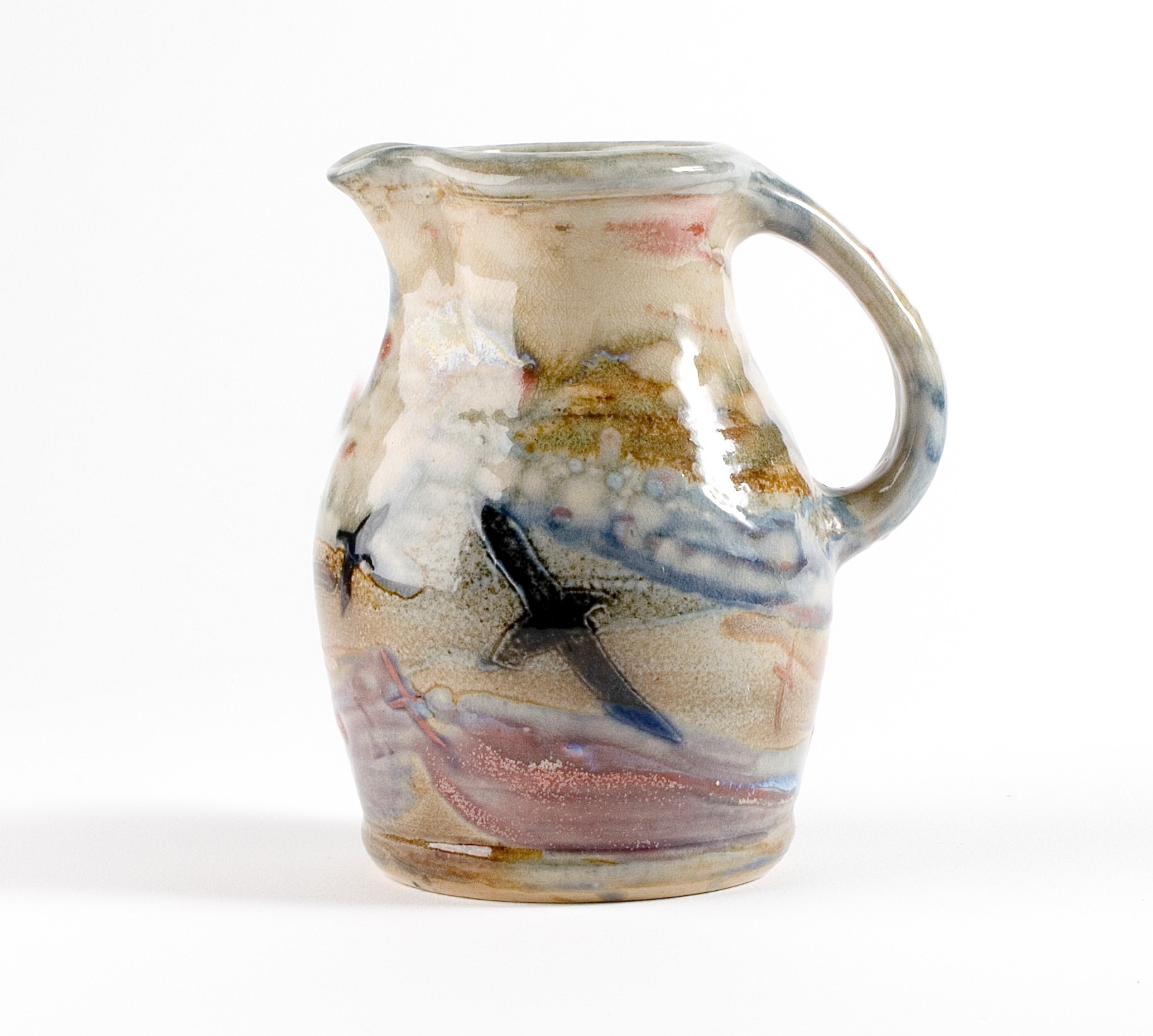
The result is a collection of tableware that is as tactile and story rich as the dishes it serves. “These pieces aren’t just serving ware,” says Montgomery. “They’re part of the storytelling.” Whether it’s the toasted blush of a wood-fired bowl or the dolphin motif – an homage to a fleeting encounter on the Sound of Barra – they carry the mark of the maker and the island alike. “Guests often ask about the pottery after their meal,” Montgomery adds. “And many stop in before leaving the island. It’s a way to take a piece of Skye home – not just a souvenir, but something shaped by the same hands that shaped their experience.”
Scorrybreac
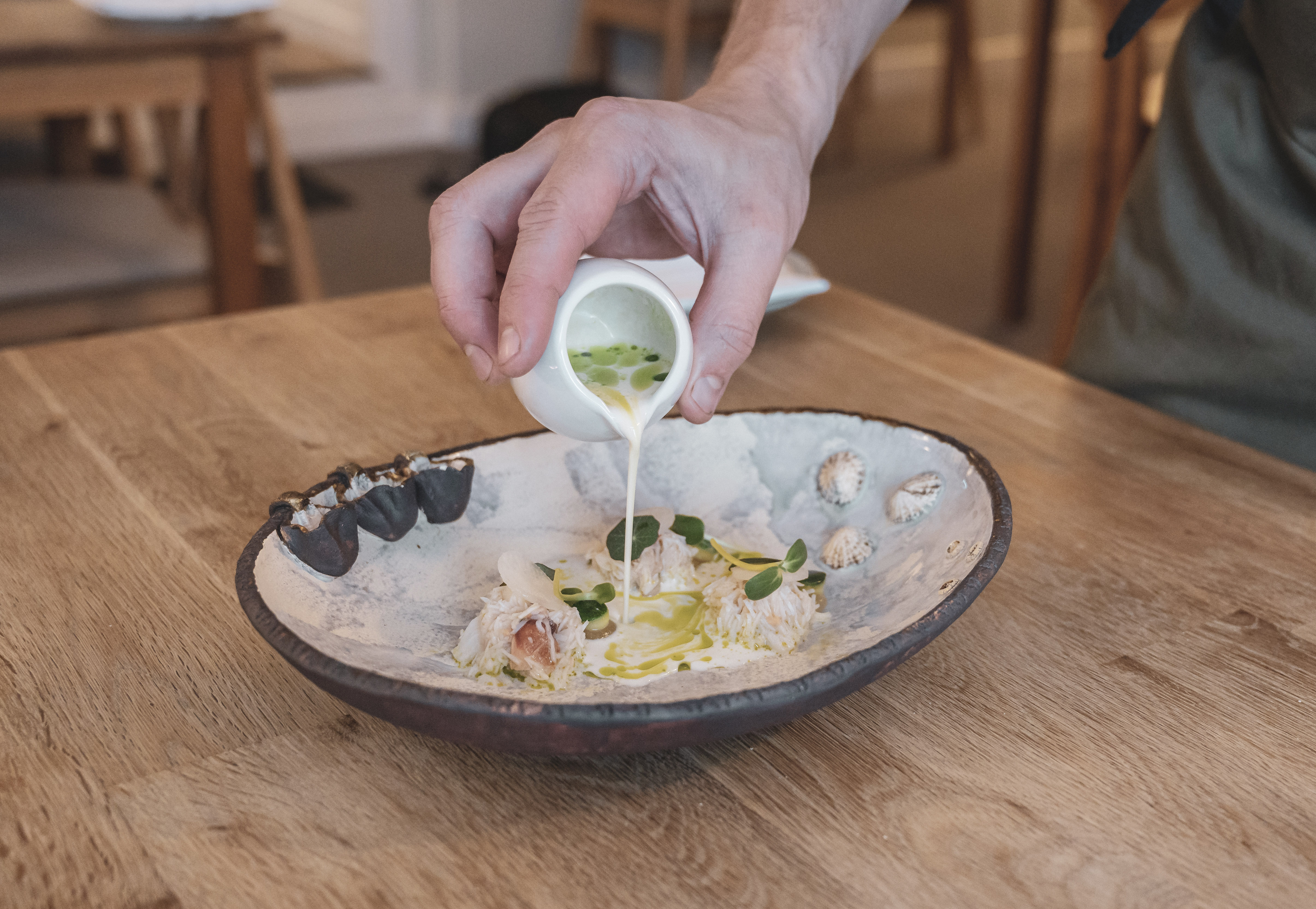
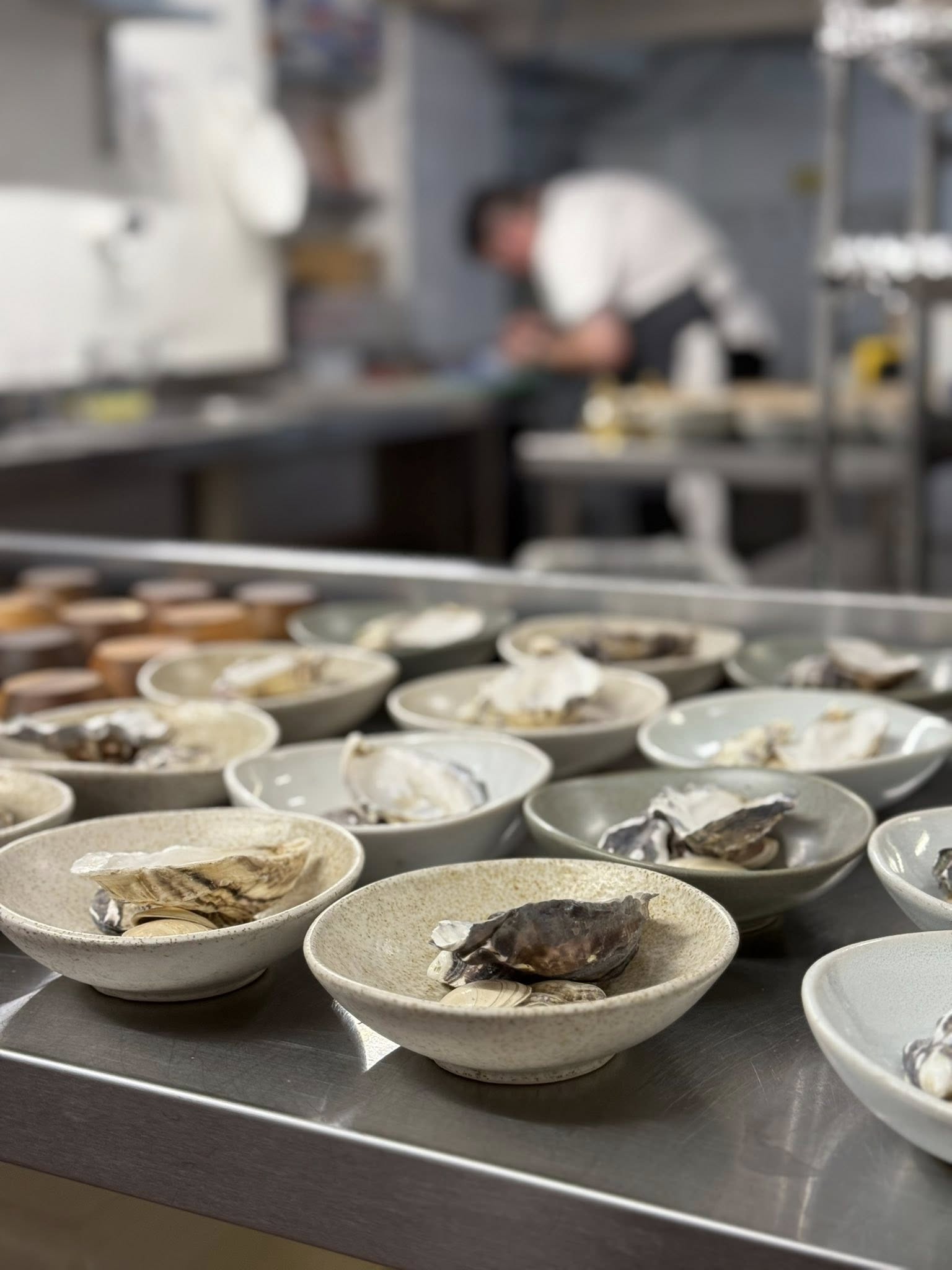
While plating food at Scorrybreac, chef Calum Munro composes edible stories of the Hebrides, using dishes crafted by ceramicists who know the landscape as intimately as he does. In collaboration with Skíō Pottery on Skye and Shoreline Stoneware in North Uist, Munro has created more than a menu; the dining experience is a sensory dialogue between land, sea, and table.
“I love using ceramics made by people I know and from the Hebrides,” Munro says. “It really elevates the food – and just like the produce, it gives guests another beautiful connection to the landscape.” For his fish dish, Kyle brown crab with almond milk, kohlrabi, and Douglas fir oil, he reached out to Louise Cook of Shoreline Stoneware. Inspired by foraging walks along the Skye coast, Cook embedded the plates with beach sand, local shells, and melted sea glass to create tiny tidal pools. “They replicate a shoreline wash-up,” Munro explains, “with textures like the tides leave behind. These plates help tell the story of where the ingredients come from.”
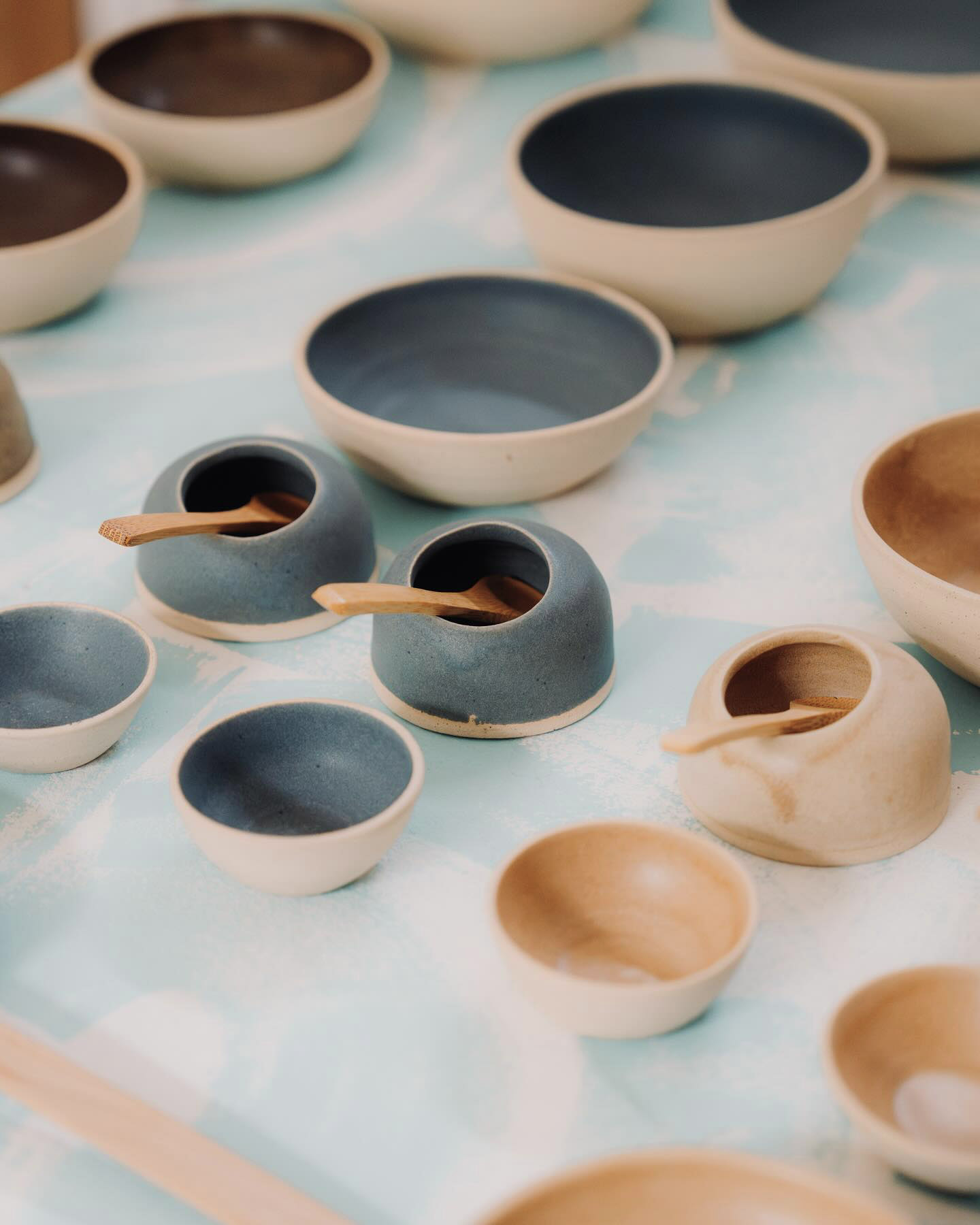
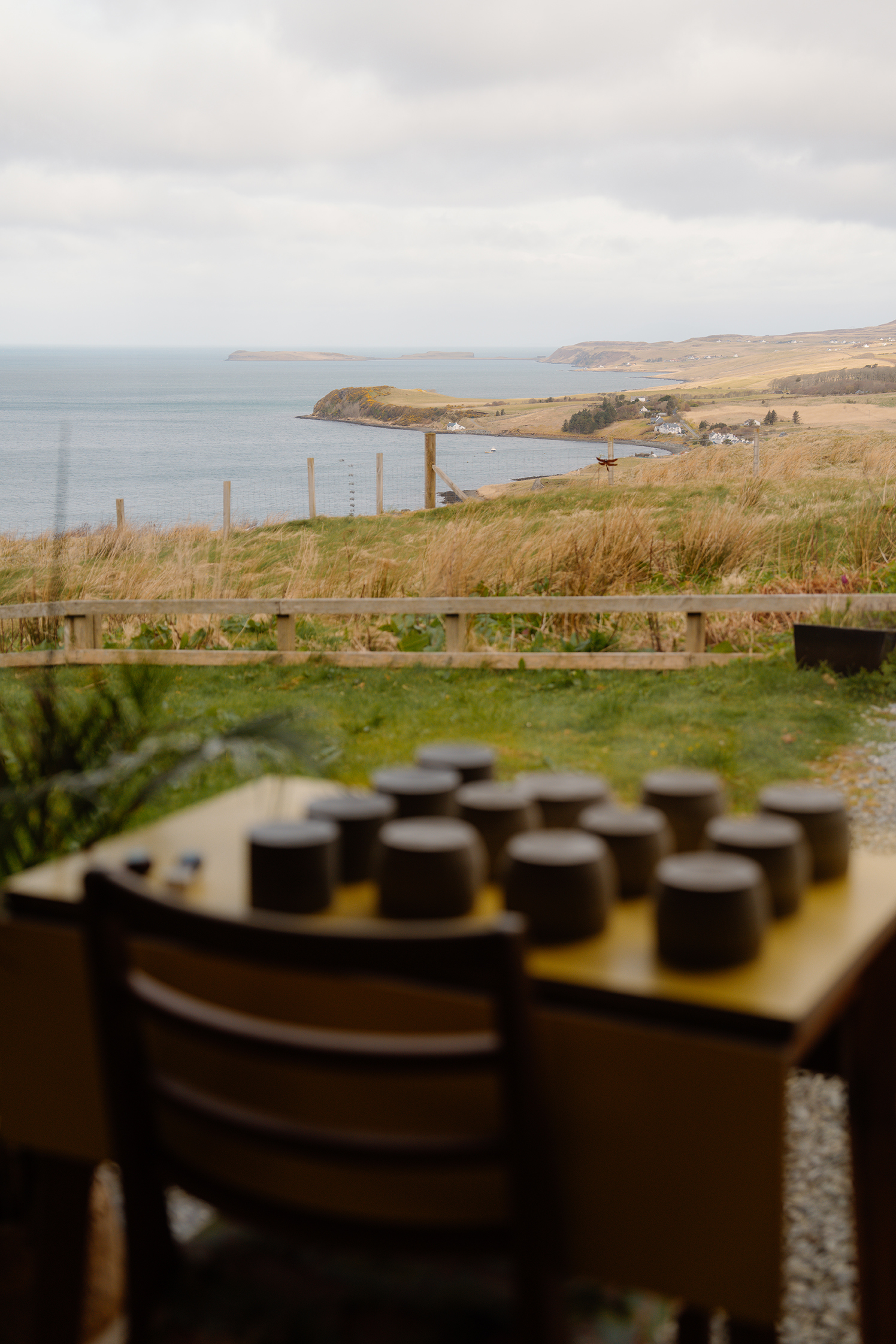
On the Waternish peninsula, Kayti Peschke of Skíō Pottery echoes that reverence for place. Her studio, perched high above Loch Bay, is both a workspace and a lookout – binoculars on hand in case an eagle soars past mid-throw. “Skye is raw and wild,” she says. “Even a walk on the beach leads to new glaze palettes, or a pocket full of ideas.” For Scorrybreac, Peschke and her partner Luke Seaton designed wide-rimmed bowls in a loch-blue glaze, challenging forms that took two people and a blowtorch to keep from collapsing at the wheel. “It was a real team effort,” she laughs, “but so inspiring to work with chefs and see the pieces come to life in service.”
Café Cùil
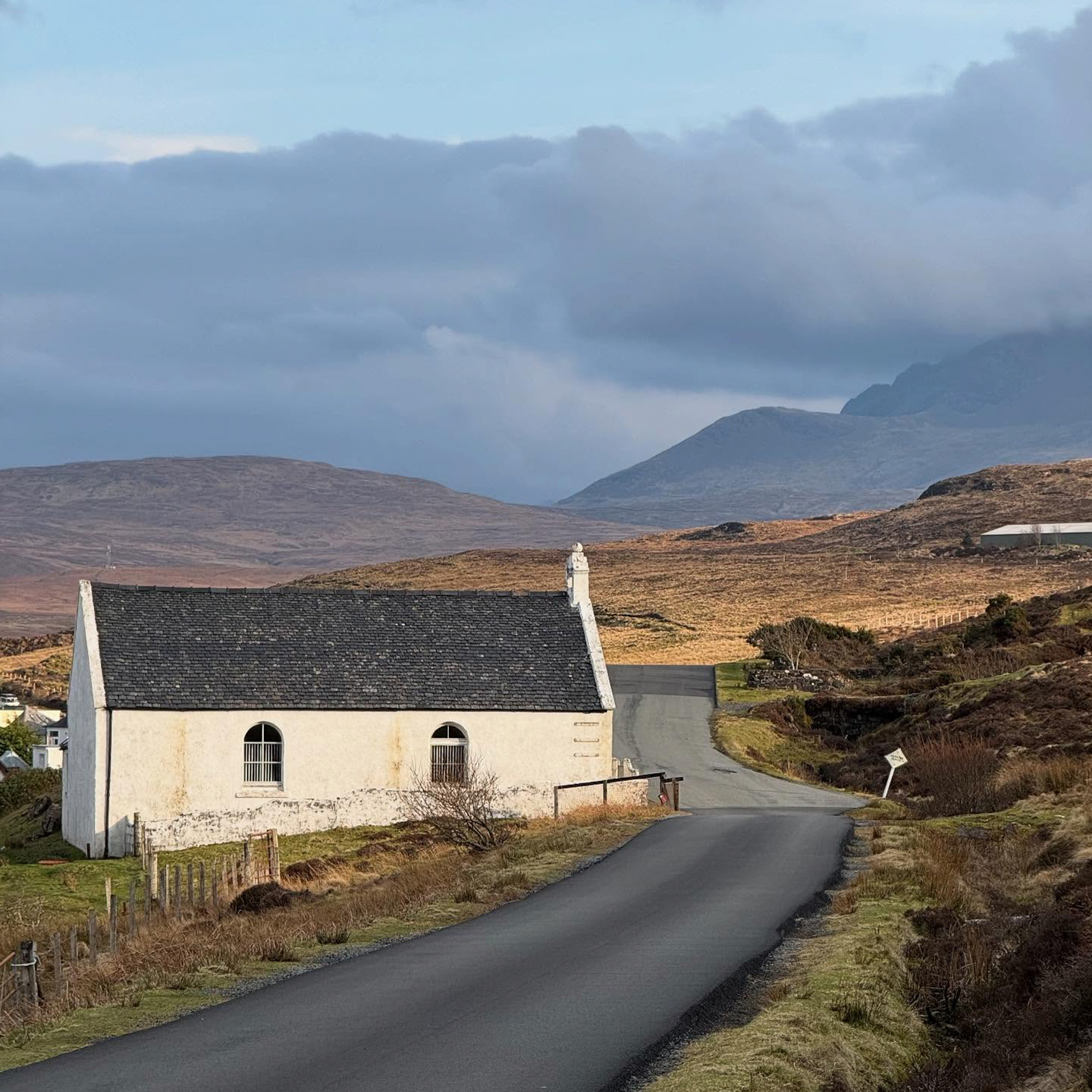
In the village of Carbost on Skye’s south-western shores, Clare Coghill enlists ceramicists from across the country to shape Café Cùil’s daily offerings, while curating a crowd-drawing seasonal brunch menu from stacks of Scotch pancakes to Scottish smoked mackerel on sourdough toast slathered with seaweed sauerkraut, traditional crowdie cheese, and cucumber.
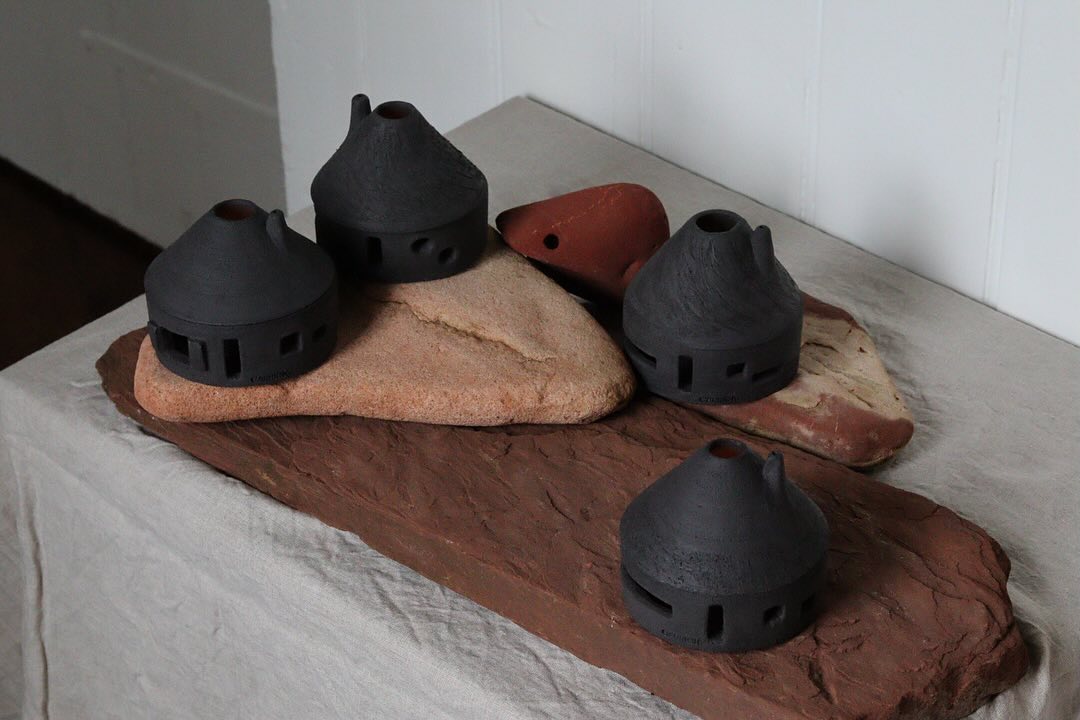
“Using local and Scottish ceramicists helps us feel even more connected to the area around us,” Clare says. “Many of the pieces that Skíō Pottery makes use sand from the shores around Skye, so guests can literally hold a piece of the island in their hands.” From brutalist espresso cups to inky basalt tumblers for cortados, the ceramics made by Skíō echo the rugged textures of the surrounding landscape. “Their barista Soňa makes flavour combinations with such depth,” Peshke adds. “Her gorse latte is my favourite, and those little cups were designed with her exact style of coffee in mind.”
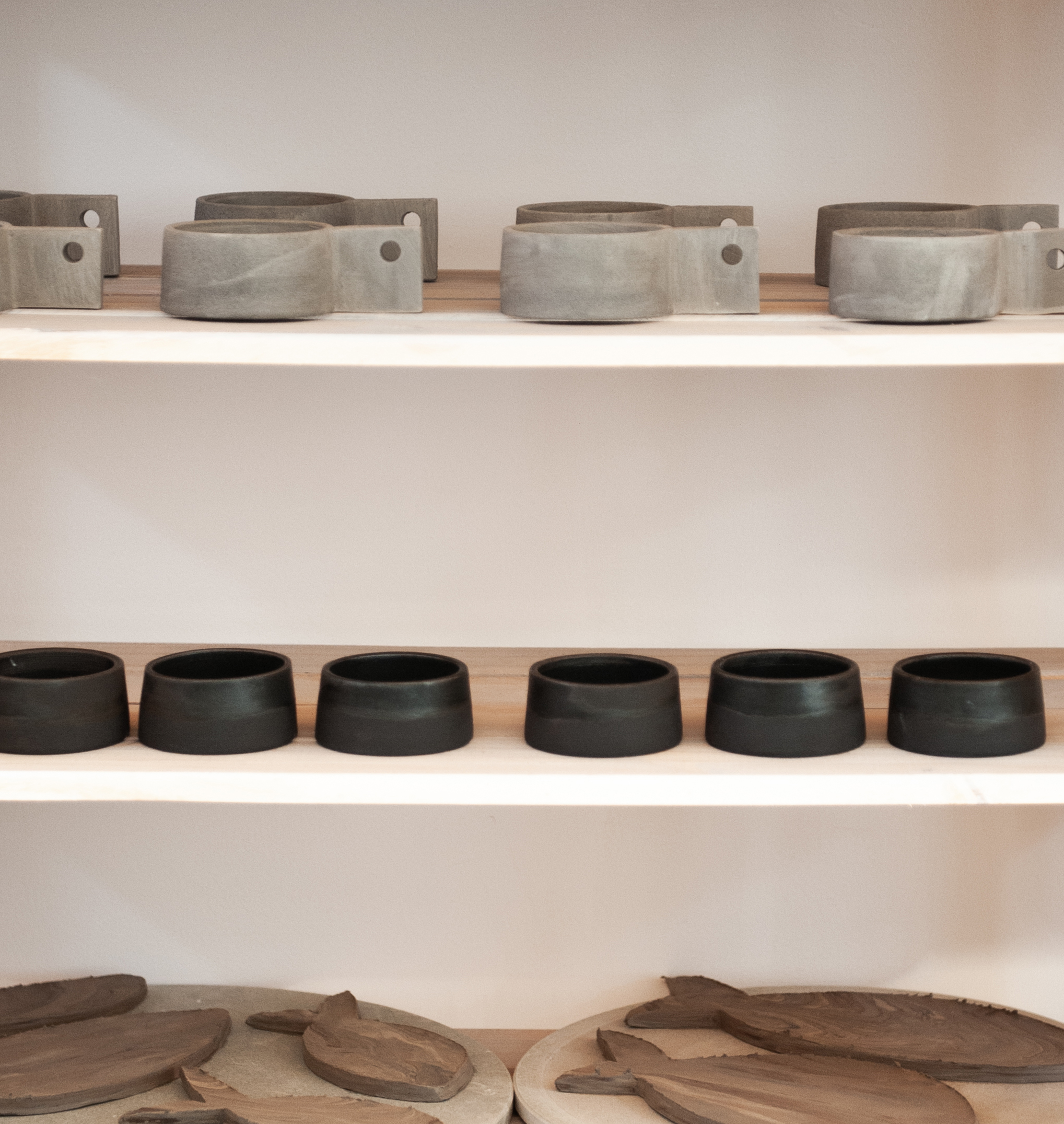
Additionally, Aimee Holt of Carrick Ceramics is based in East Lothian but forever drawn to the Hebridean coast. “I’ve always loved Skye,” Holt says. “So being asked to create pieces for Café Cùil felt really special.” Her ceramics are quiet and refined, each wheel-thrown cup featuring raw clay edges that evoke Skye’s sand-swept shorelines. “I wanted the forms to be minimal and considered,” she explains, “a simple homage to the land and coast.” Influenced by Japanese design principles and the natural imperfections of stone, Holt’s work celebrates texture, quietude, and tactility—values that deeply resonate with Coghill’s food and ethos.
Birch Coffee
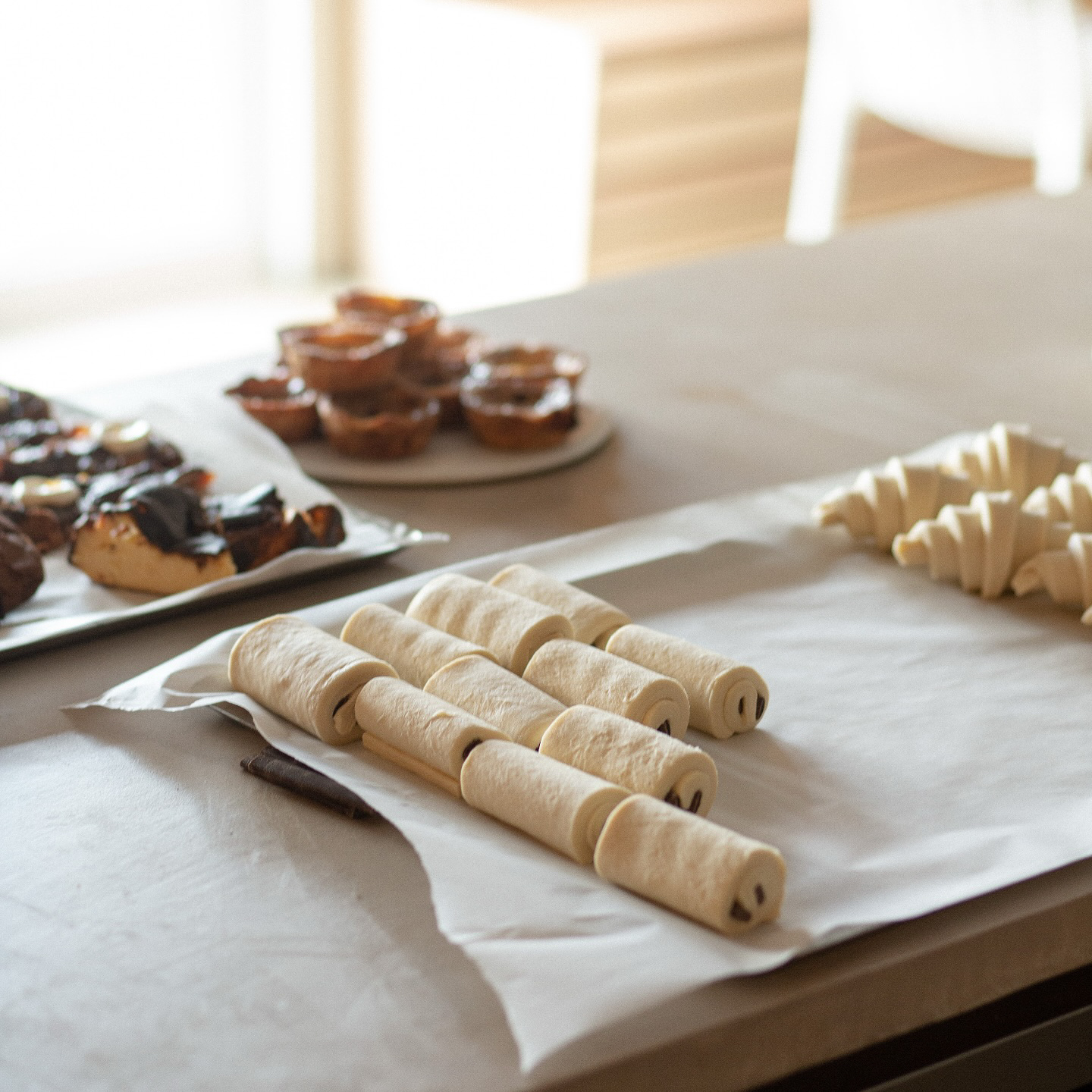
Following the success of its cafés in Portree and Inverness, Birch Coffee recently opened a micro-bakery and roastery on the outskirts of the island’s capital, with a Scandi-style, open-plan space to sit-in. The minimalist tableware has all been designed exclusively for Birch by Scottish ceramicists, Cara Guthrie, Samuel Sparrow, and Caitlin Bowbeer.
At the heart of the Birch experience is the two-toned mug, an instantly recognisable piece created by Guthrie, whose work has taken her from Scotland to rural Denmark and who is now throwing clay in the Pentland hills. “Sipping coffee from handcrafted ceramics adds so much to the coffee drinking experience,” says Birch founder Niall Munro. “As well as appreciating their beauty, little details like this show the customer that everything is well considered and thought out – including the coffee they are drinking.”
Guthrie’s fine art background lends a sculptural sensibility to even her most functional wares. Her glazes are soft, organic, and inspired by the Scottish landscape, while her forms reflect years of study and intuition honed through repetition. The mugs created for Birch embody this philosophy. With clean lines, natural textures, and a pleasingly weighted feel in the hand, they elevate the ritual of a morning coffee—from the beans, roasted on site, to the cups in which they’re served.
Chloe Frost-Smith
Having swapped hieroglyphics for luxury hotels, Chloe Frost-Smith is a fountain of knowledge when it comes to the most intimate, family-run hotels be it city, village or rural escape. When Chloe’s not reviewing the latest hotel opening, she’ll be stomping around the Highlands, enjoying a wildly, cold plunge or paying an ode to her childhood spent on horseback in the paddy fields around Mount Fuji. Now how’s that for an adventurous spirit! We’ll turn to Chloe for her epic Scotland-based encyclopaedia of walks, pastry spots — Lannan’s cardamom buns a firm favourite — and for her endless, tantalising tales of Nordic magic.