the reimagined Highland hideaway
In my bathroom is a posy of freshly-picked heather between the sinks. On my desk, a leatherbound notebook, a pot of the pointiest fresh pencils and a sharpener, lest one of them should blunt. The bed is made up like a millefeuille, layers of flax linen, organic hemp and crisp cotton. Wafting along the hall, a wisp of Astier de Villatte incense burns. And the soundtrack, the lusty crackle of a just-lit log fire. The micro detail at Hope Lodge is immaculate. This is a sensory adventure that has been considered right down to the tiniest elements.
When I showed my children on the map how far north I was going, their eyes popped out on stalks. If you have made it here, you’ve made quite the effort, a two and a half hour drive north of Inverness Airport along winding and wondrous single-lane tracks, wind-blasted, bracken-blanketed hills rising on either side. This place is remote. And yet it’s not remotely rustic.
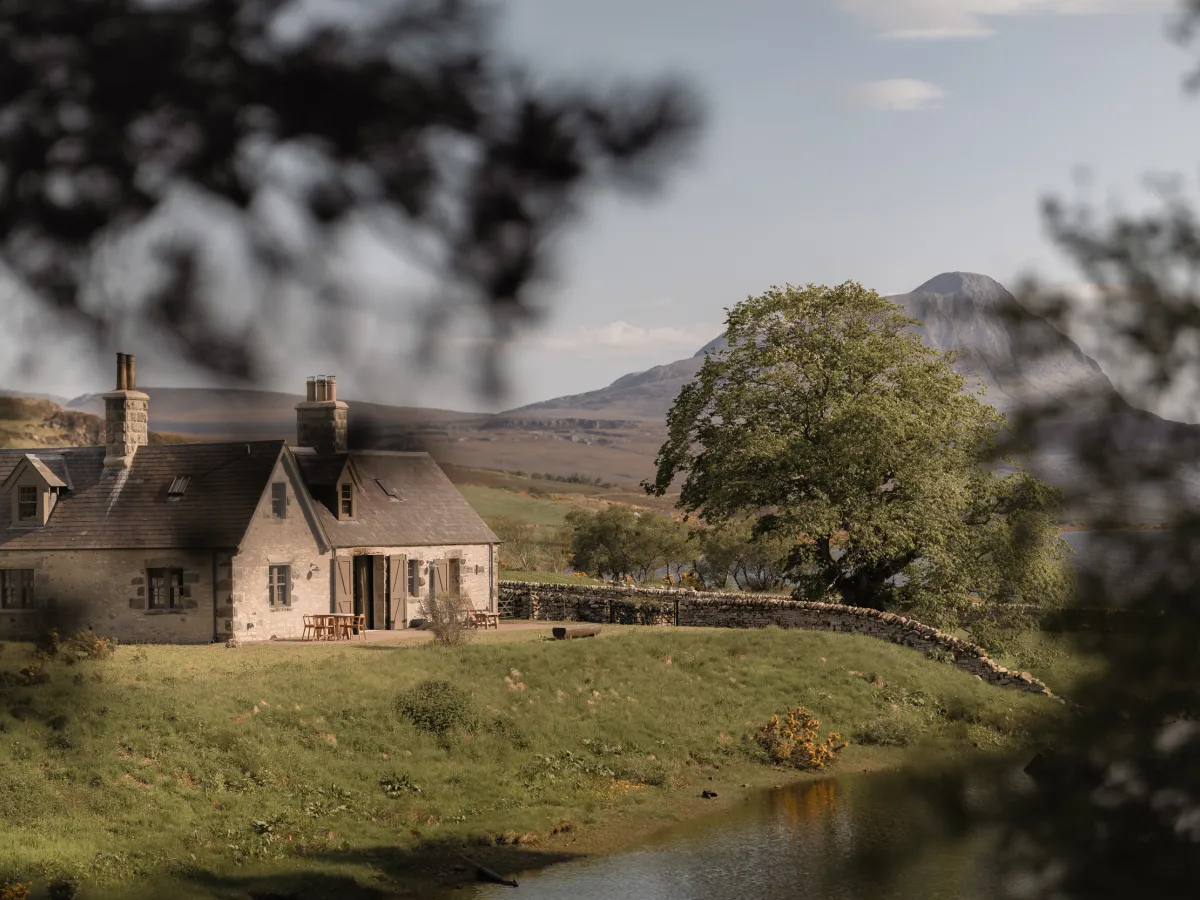
The lodge is set within 100,000 acres of Sutherland in the farthest reaches of the Scottish Highlands. The tidal River Hope, with some of the best salmon and sea trout fishing in the UK, rushes past on its way from the tip of freshwater Loch Hope to the salty depths of Loch Eriboll. Ben Hope, Scotland's most northerly Munro, dominates the horizon, shifting from slate grey to misty mauve throughout the day. The landscape is wild and woolly and right now it’s being looked after better than ever before.
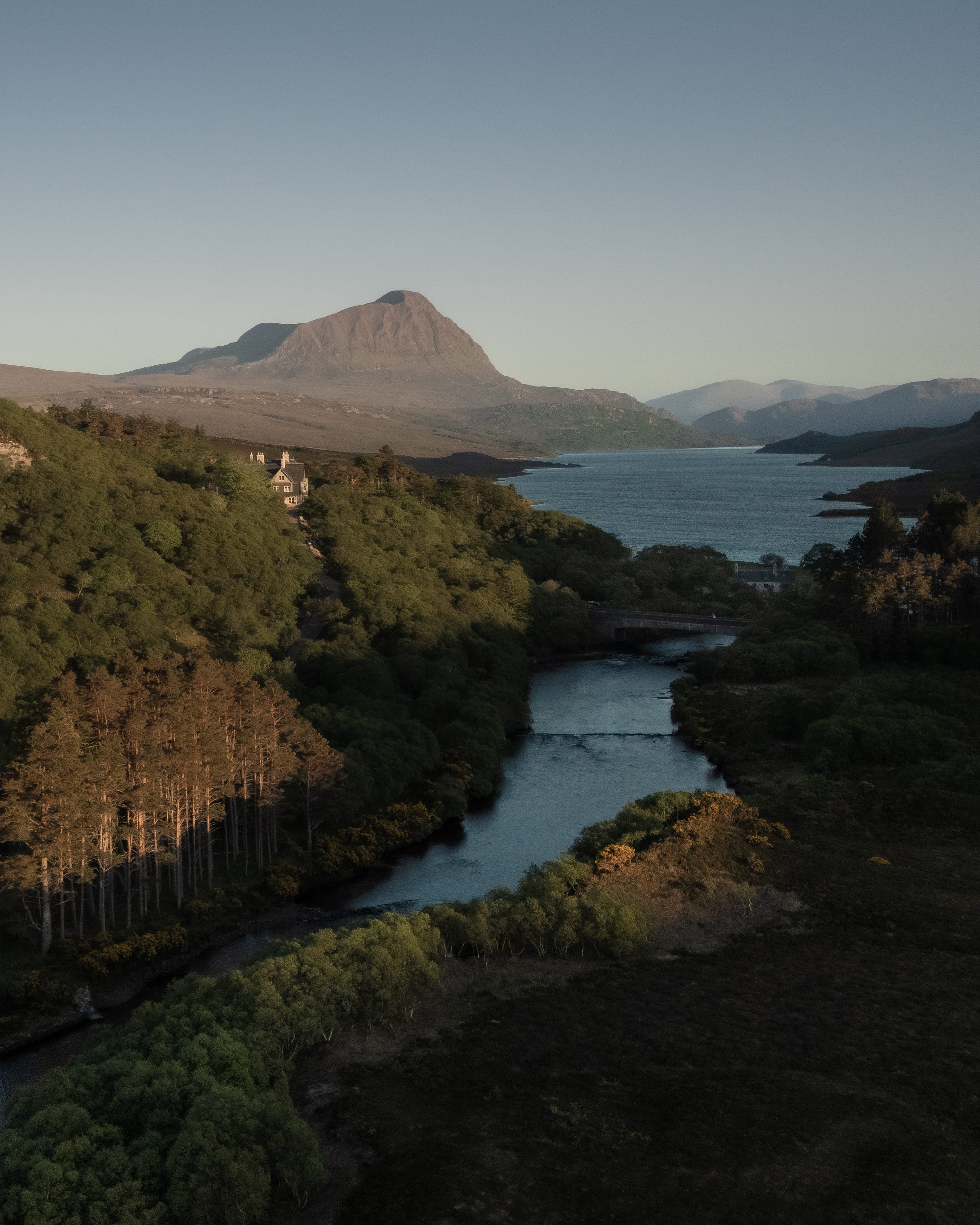
Hope’s owners Anne and Anders Holch Povlsen are the country’s largest private landowners, custodians of swathes of phenomenally beautiful terrain. Their WildLand estates currently span the Cairngorms, Loch Ness and Sutherland, hundreds of buildings, many crumbling into disrepair, and countryside that has suffered for decades from overgrazing and deforestation.
The responsibility is vast and the Povlsens have rolled up their sleeves to meet the challenge. Theirs is no sticking plaster approach. Instead a 200 year masterplan has been drawn up, a deep-rooted, long-reaching blueprint for future generations. It is conservation on an absurdly generous scale, from craggy cliff to mountain peak, sheltered lowlands to inaccessible wilderness. Fence removal and deer management have been top priority, while more than six million trees have been planted across the estates to date.
The same exacting commitment is applied to the hospitality arm of WildLand. This is not just about the caretaking of castles and cottages. At Hope Lodge it is a total reimagining. Hope is a perfectionist’s lair, meticulous to the nth degree. The renovation has been 13 years in the making, ambitious and sensitive in equal measure. There is nothing quite like it on the Scottish scene. “The house is now more than double the size of the original,” explains Gunnar Groves-Raines, co-founder of Edinburgh architecture practice GRAS, who has been here every step of the way. Structurally, it has undergone the most extensive reconstruction while still looking, at least from the outside, very much like a traditional 19th-century hunting lodge. The extensions are seamless, sitting rooms and dining rooms spilling into one another. The lower floor, excavated from the bedrock, is cavernous and yet totally in sync with the bones of the place. Upstairs are seven bedrooms, which in the summer months can be booked individually as if a hotel, and for the rest of the year are for exclusive use. Two whip-smart suites are tucked away in the modern industrial An Cala cabin, and a pair of independent cottages are a short walk away. “The WildLand vision looks hundreds of years ahead so we need to make sure that the architecture and design stands up to that,” Gunnar continues. There is no plastic, little waste and obsessive attention to how everything is sourced, built and operated. It’s not all work and no play though. Gunnar brings his surf board with him each time he visits - Inverhope has a secret wave.
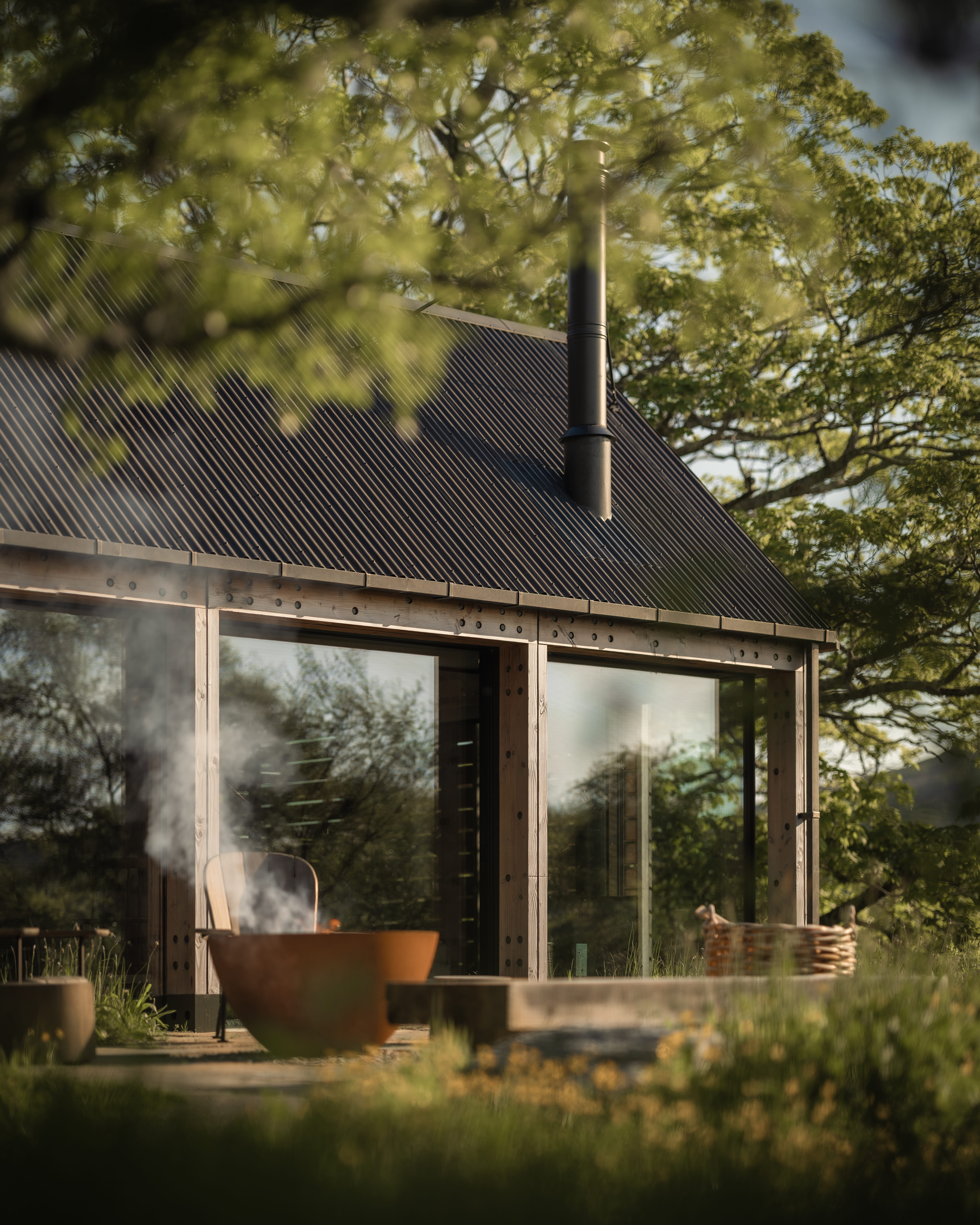
South African studio Cécile & Boyd, whose clients include the ultra-luxe Singita lodges, was drafted in to conjure up the interiors. Bringing a safari sentiment to Scotland is more symbiotic than it sounds. “There is a great synergy between the two brands [Singita and WildLand]. The conservation and the aesthetic,” reflects design director Paul van den Berg. “We wanted to move away from the gentrified Scottish style, to do something different. It needed to be contemporary, cool, but also withstand the test of time. So we looked at the landscape, the natural tones and brought that palette inside.” What they have created is a riotous celebration of texture. Everywhere. Hopsack wall coverings, thick knitted rugs, rough hewn stone, campaign-like leather slung chairs, foxed mirrors. There are creamy linens alongside cast iron, wood alongside wool, and all the neutral colours of the Highlands, from creams and sands and tans to deliciously chic taupes. It is earthy and elemental, deeply comfortable and diligent in its design. Completely charming staff are dressed top to toe in a complementary wardrobe of Toast (Povlson is the majority shareholder and also has stakes in Varley and Drakes).
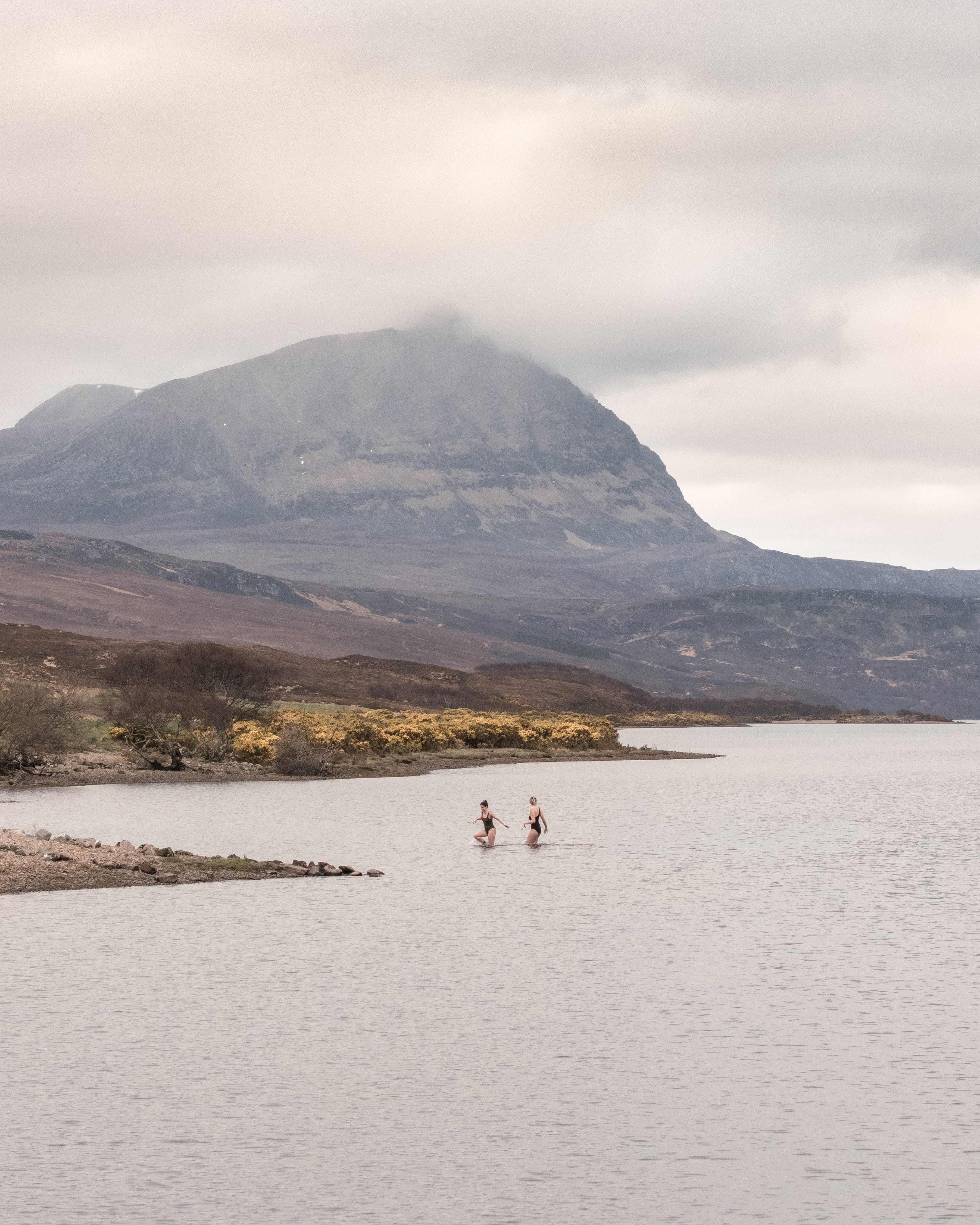
There is plenty to do but none of it feels like a programme. Venture out on a galloping walk with the nature ranger to find hidden waterfalls, take picnics on the squeaky white sand of Sutherland’s beaches, go foraging for supper’s ingredients. Icy swims in the loch are really magical, especially for early risers when the water is like glass, and a steaming hot sauna tent helps toes to warm up after.
In The Clachan, the nerve centre behind the lodge, beneath the gym and treatment rooms, a storeroom of paddle boards and e-bikes and all sorts of box-fresh adventuring kit is ripe for the picking. Being outdoors is very much the point here but every time you head back in, the fires are lit and a cup of tea or a hot toddy and a sticky homemade flapjack will be waiting.
Hope in isolation is a phenomenal experience but WildLand’s properties stretch across the country, and travelling between them begins to reveal the scale of the Povlsons’ objective. This kind of Scottish safari, moving slowly from Glenfeshie Lodge and Killiehuntly Farmhouse in the Cairngorms, to Hope Lodge, Lundies House and Kinloch Lodge on the North Coast, and onwards to Loch Ness where Aldourie Castle is joined by the first WildLand pub, the Dores Inn, is eye-opening. That’s before the conversation turns to Jenners, the beloved department store in Edinburgh that’s finding new life as a hotel. Or the fact that the ink has barely dried on the acquisition of Kinross House, one of Scotland’s most important early classical buildings. The WildLand project is not just far from finished, it’s only really getting started. Haste ye back, the Scots road signs say, and I sincerely hope I will.
Issy von Simson
Still strongly tethered to her hometown London, Issy certainly knows what’s groovy in the UK capital. But, lucky for us, her knowledge extends far beyond the reaches of Zone 6. Perpetually drawn to the coast – the brinier the better when it comes to the air – Issy is our go-to for seaside getaways. Opinionated and organised, she’s pretty much our ideal travel companion; you know you’re going to get a perfectly planned trip when Issy’s in charge. So, follow her tips and do as Issy does. You’ll end up in the most gloriously unexpected of places.