the Arctic hideaway
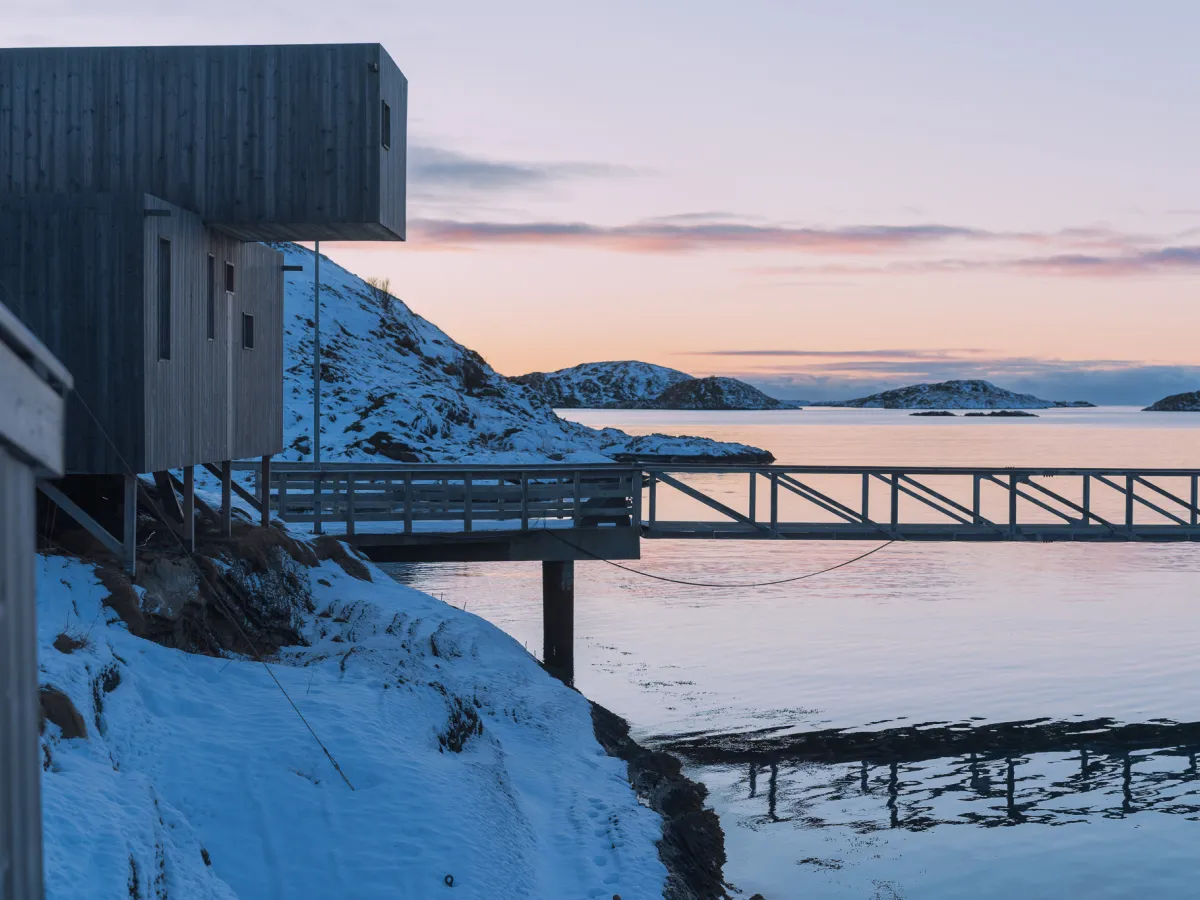
Just above the Arctic Circle in North Norway, Bodø is the northern terminus of the national railway – twenty hours by train from Oslo – with a small airport. From here, a robust, near-empty ferry traverses the Norwegian Sea toward the Fleinvær archipelago, a constellation of low-lying granite islands. As you travel, mountains rise sharply out of the sea, their steep forms set directly against open water – an unfamiliar meeting of landscapes. On one of these islands lies the Arctic Hideaway.
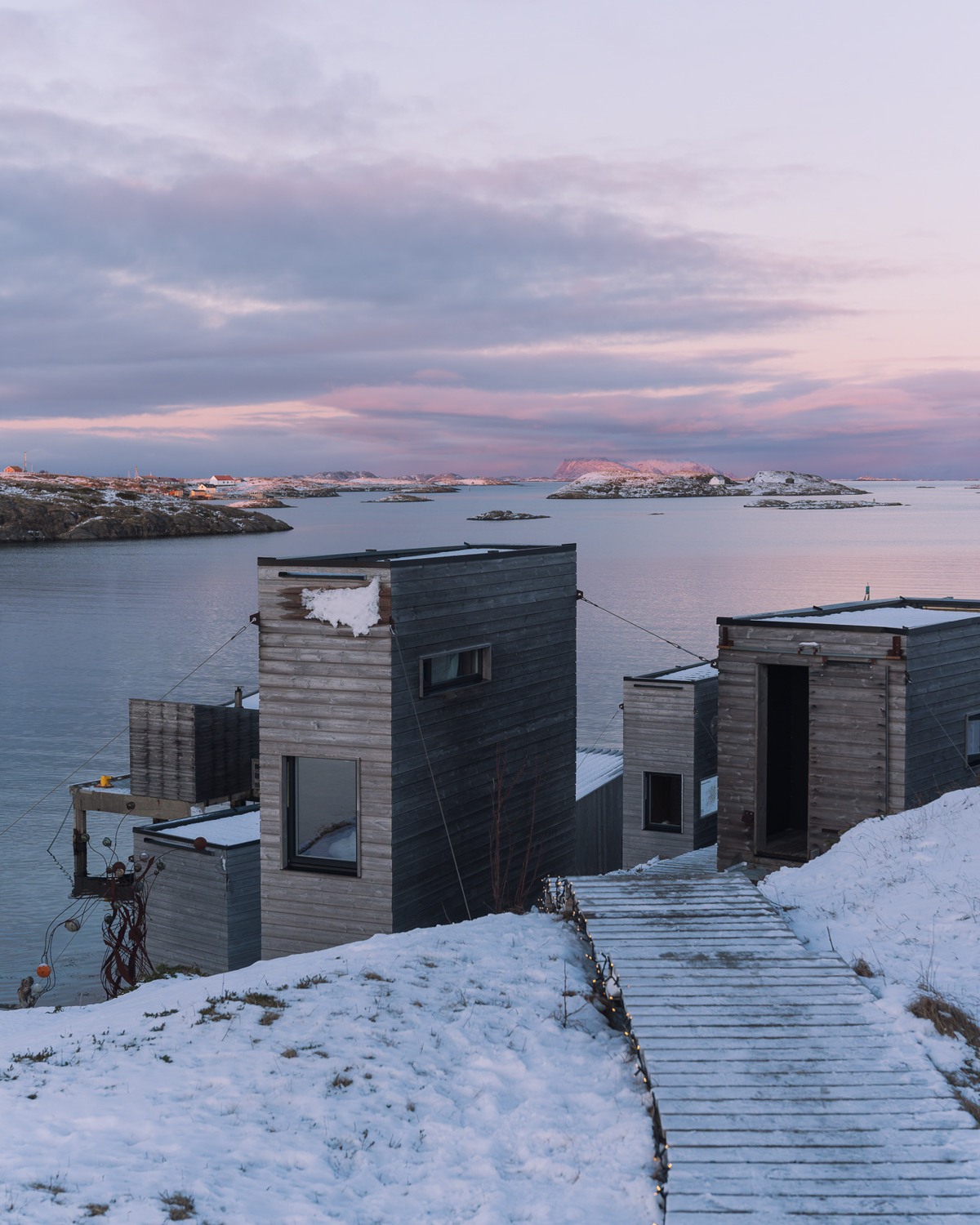
Arriving feels less like a retreat into isolation and more like stepping into a remote Northern port, known only to those who have reason to come. The island itself has but a handful of permanent inhabitants - among them an artist, an astronomer, a researcher, and a few musicians - who are keen to meet those who have made the journey out here. From this place, the Arctic is not experienced as emptiness, but as a place of rhythm, restraint, and a unique human gathering at the edge of the world.
The Hideaway is arranged as a cluster of small wooden cabins, each one pared back to its essentials – a bed, a place to sit, little else – perched along a gentle North-facing incline like a nesting formation overlooking the sea. A handful of shared buildings – a kitchen with a long wooden dining table, a quiet workspace with large windows, and a tower-like room for gathering or retreat – draw you outward again and again. Moving between them means stepping into the elements each time: wind, snow, salt air. Stairs are climbed in all weather, thresholds are crossed in boots; there are no internal corridors.
This constant passage between – up and down, in and out – creates a particular awareness of others. You know who is here, and where. There is no distance to hide in, and no script to follow. The architecture of the cabins, the rhythm of movement, and the shared conditions of the island produce a natural proximity. In rough weather especially, attention sharpens. You look out for one another, and a sense of intimacy forms.
People arrive not as anonymous guests but with intent – artists, writers, musicians, thinkers observers of the Arctic – often through residencies or self-directed retreats. Mornings begin in the communal kitchen, where breakfast is laid out simply: Norwegian cheeses, fresh bread baked on-site, reindeer sausage, oats and eggs. There is no formal service, only a welcoming orchestration by the rotating host – often an artist or visiting steward – who sets the tone without imposing structure. Guests move easily between roles, preparing meals, setting tables, clearing space, as strangers gradually assume the cadence of a temporary household.
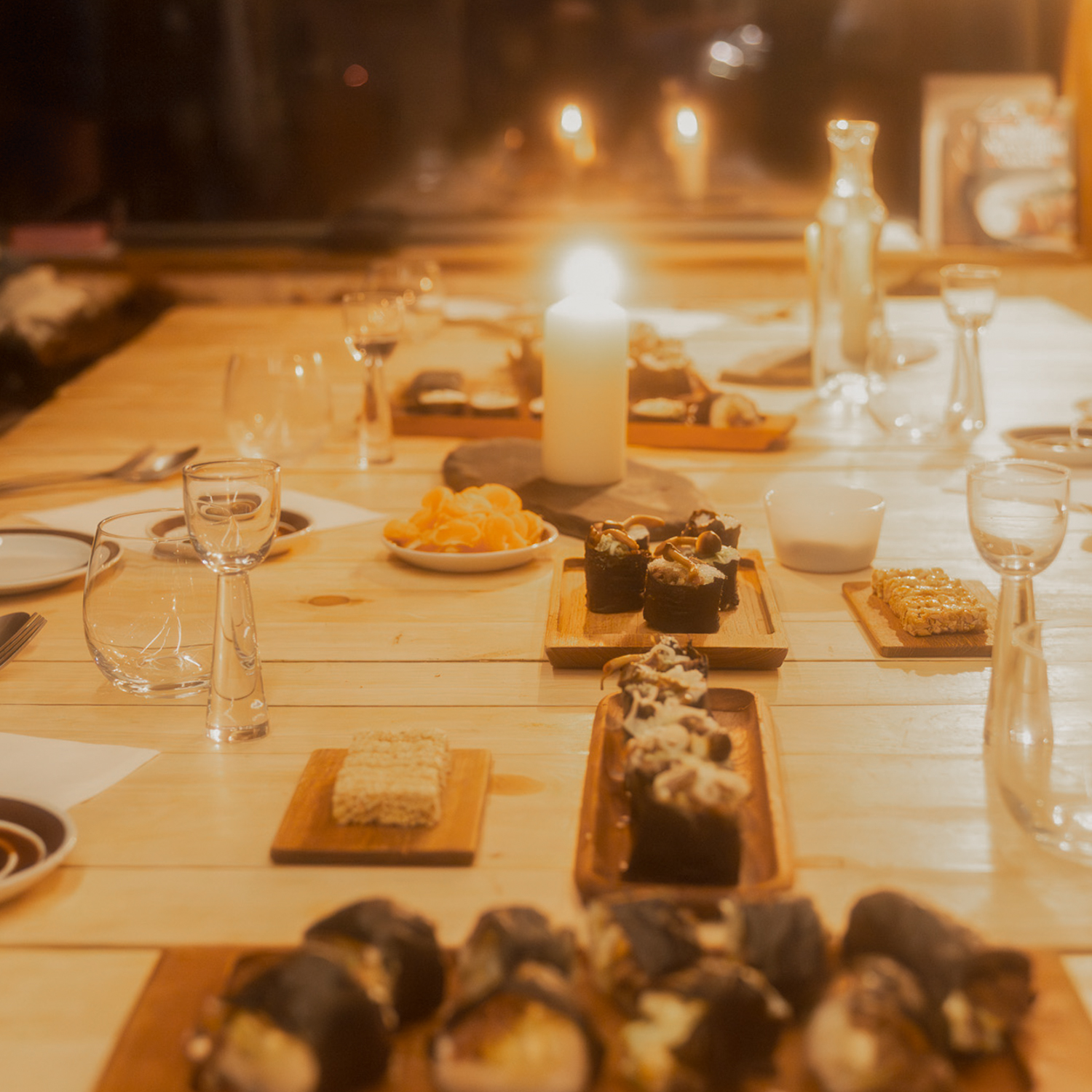
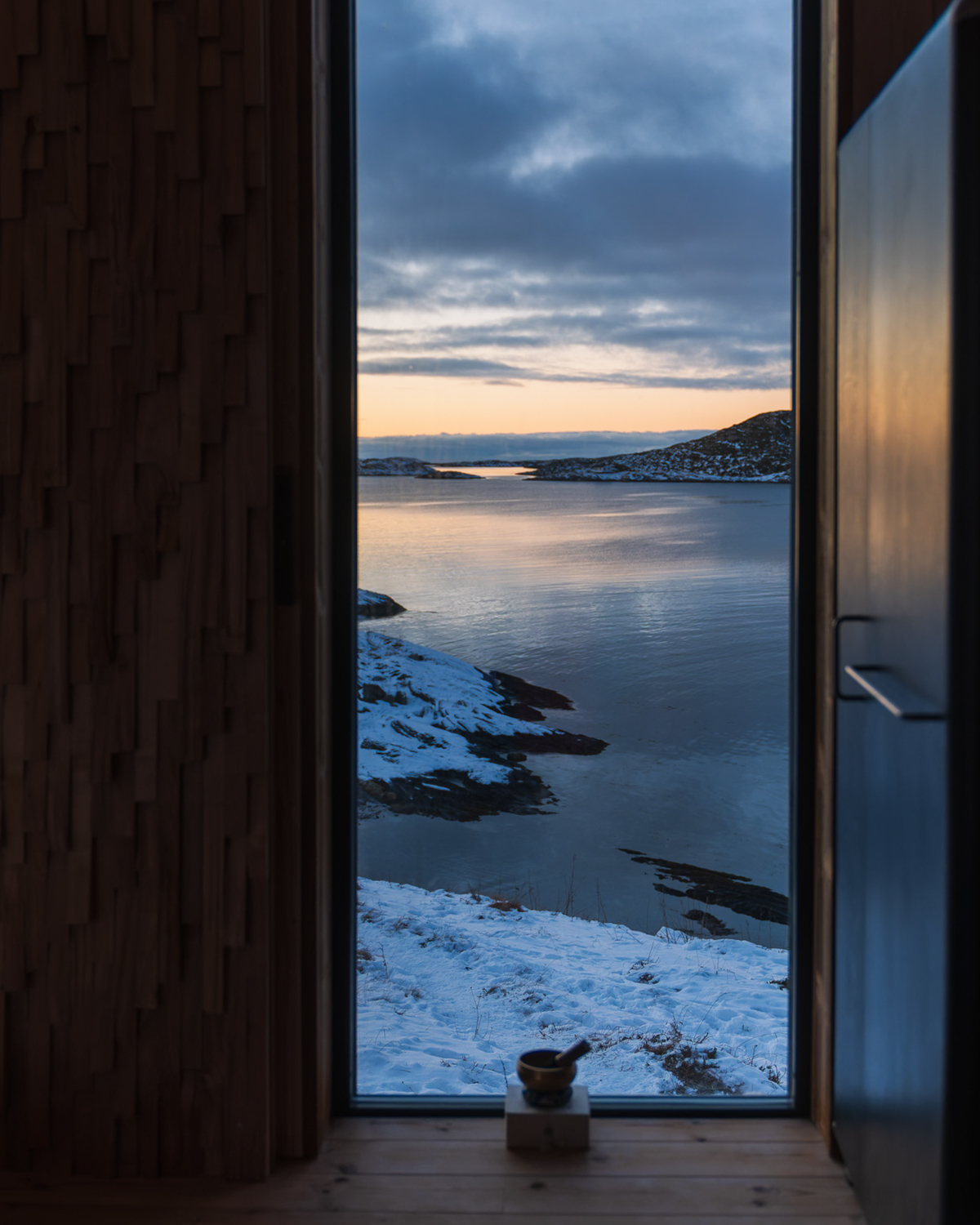
With no shops on the island, the pantry dictates both limitation and creativity. Freezers hold wild reindeer and pollock, shelves carry dry goods and essentials, and meals are composed with a sense of restraint that sharpens attention. Cooking rotates between residents, turning dinner into both responsibility and offering. What emerges is participation: a shared authorship of daily life. You begin to taste where people come from – small variations, gestures, traces carried into each meal. It gives the Hideaway an unexpected richness that cannot be planned or replicated.
A wood-fired sauna is heated daily, followed by cold immersions in the sea. Between these rituals, guests disperse: to write, to walk, to work, or to sit in observation of the shifting Arctic light. At times, the Aurora moves across the sky without announcement. A nearby hill offers a vantage point with distant views towards the Lofoten Mountains and the faint glow of Bodø on the horizon.
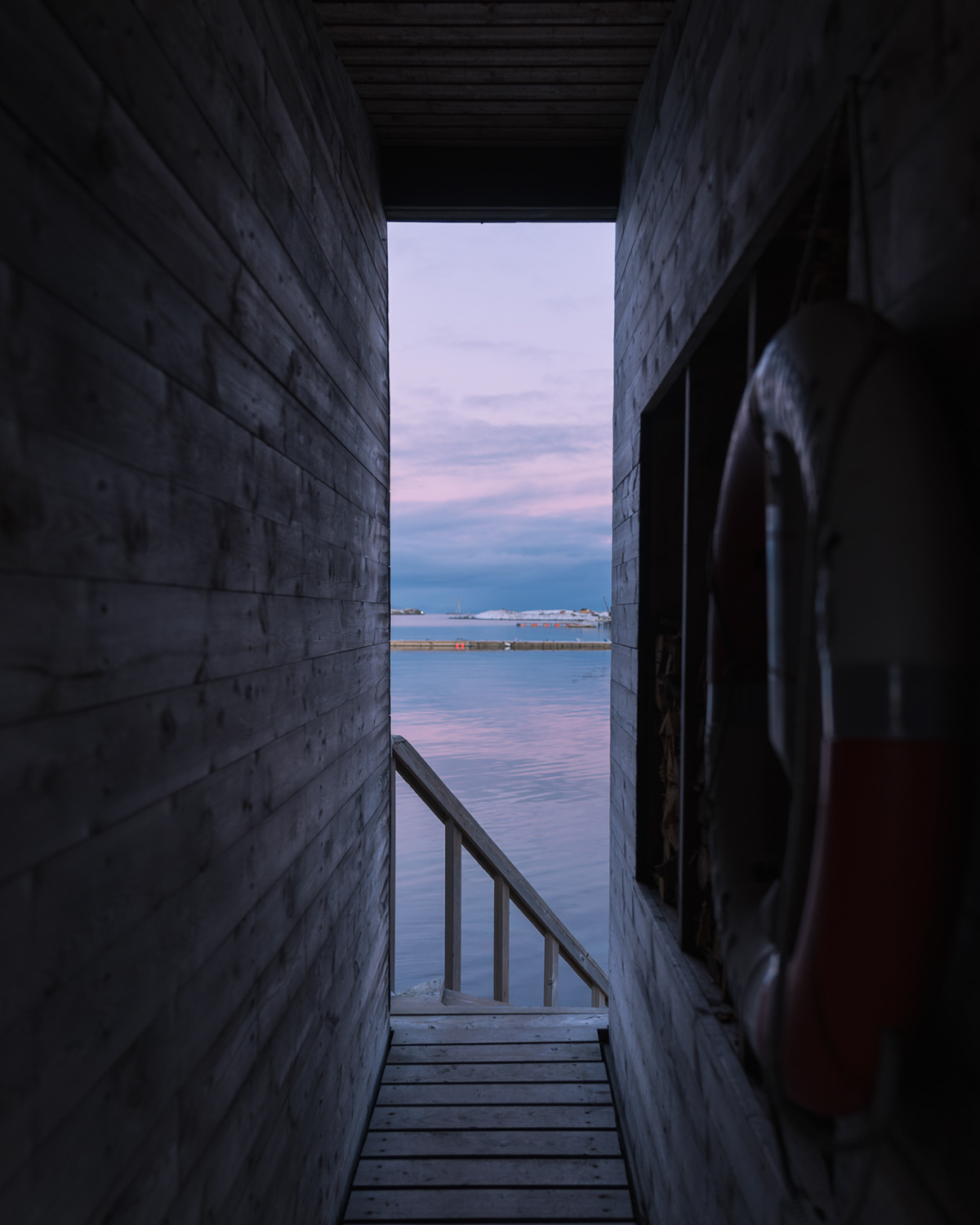
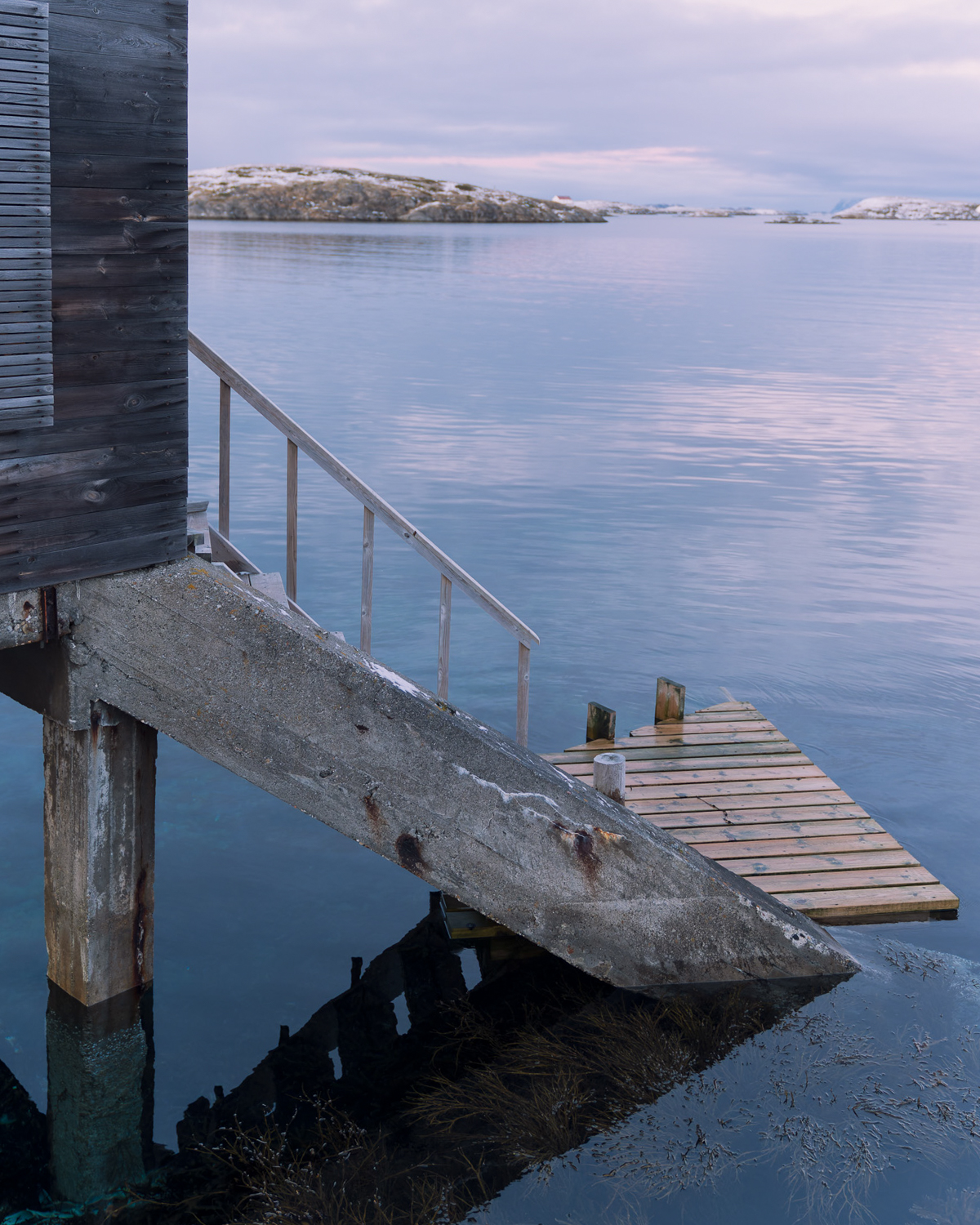
Despite its remoteness, the Hideaway carries the atmosphere of a place in flux. The ferry docks directly at its edge, bringing people in and out at irregular intervals. Guests arrive as individuals and leave having briefly formed something resembling a family. It feels less like a destination than a passage – a place where lives intersect for a time, before continuing on.
Thor Schuitemaker