coffee and culture at high altitudes
I am up at first light—truly an unlikely phenomenon, as those who know me might attest. But the ill-behaved roosters were creating such a racket that I was abruptly awakened.
The previous night, I had succumbed happily to a food coma soon after supper. My kind host, a simple farmer, had prepared a local delicacy for me, called pa’piong. The dish consists of minced pork mixed with chopped nettle leaves, coconut shavings and lemongrass. Everything is roasted inside bamboo tubes over an open fire.
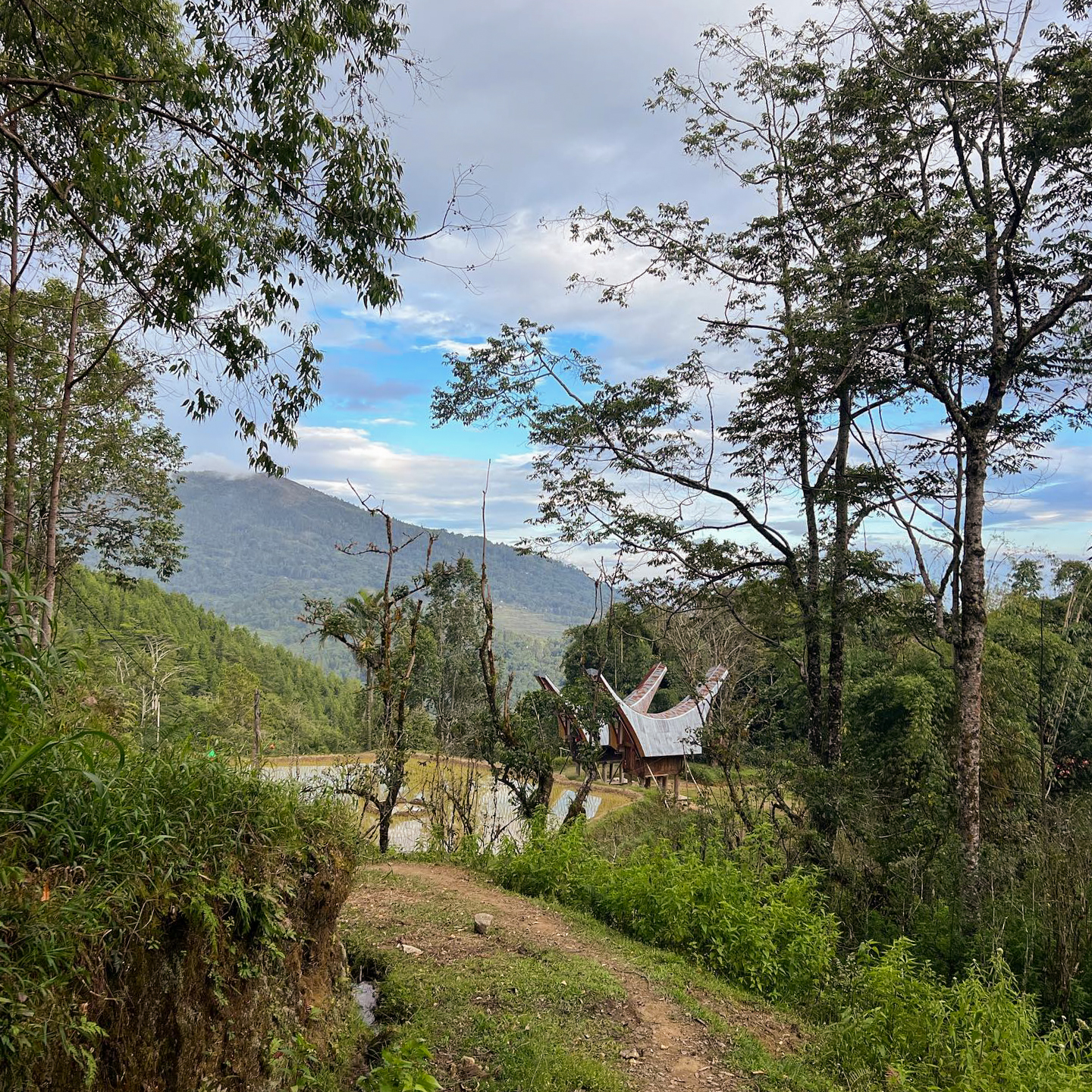
Welcome to rural Sapan. We are in prized coffee territory in the northern Toraja highlands of Sulawesi, Indonesia. I have come here, to a height of 1,700 metres or more above sea level, hoping to restore a derelict coffee plantation that I inherited. There is an Alpine-like quality to these parts, differentiated largely by their tropical vegetation and culture.
Caffeine aside, when Indonesians think of Toraja, we conjure visions of lavish funeral ceremonies. They last for days and involve dances and rituals of ancient, animist origin. Dozens of livestock are sacrificed for the dead. Most prestigious among them are buffaloes, especially those of the albino, spiritually potent variety. These bovine spirits guide the Torajan dead to puya, the spirit realm. The deceased’s remains are then entombed high up in cliff-side grottos or inside gigantic boulders. Those of the nobility are entitled to have wooden effigies, who stare down at us eerily from wooden balconies on these rock-cut caverns.
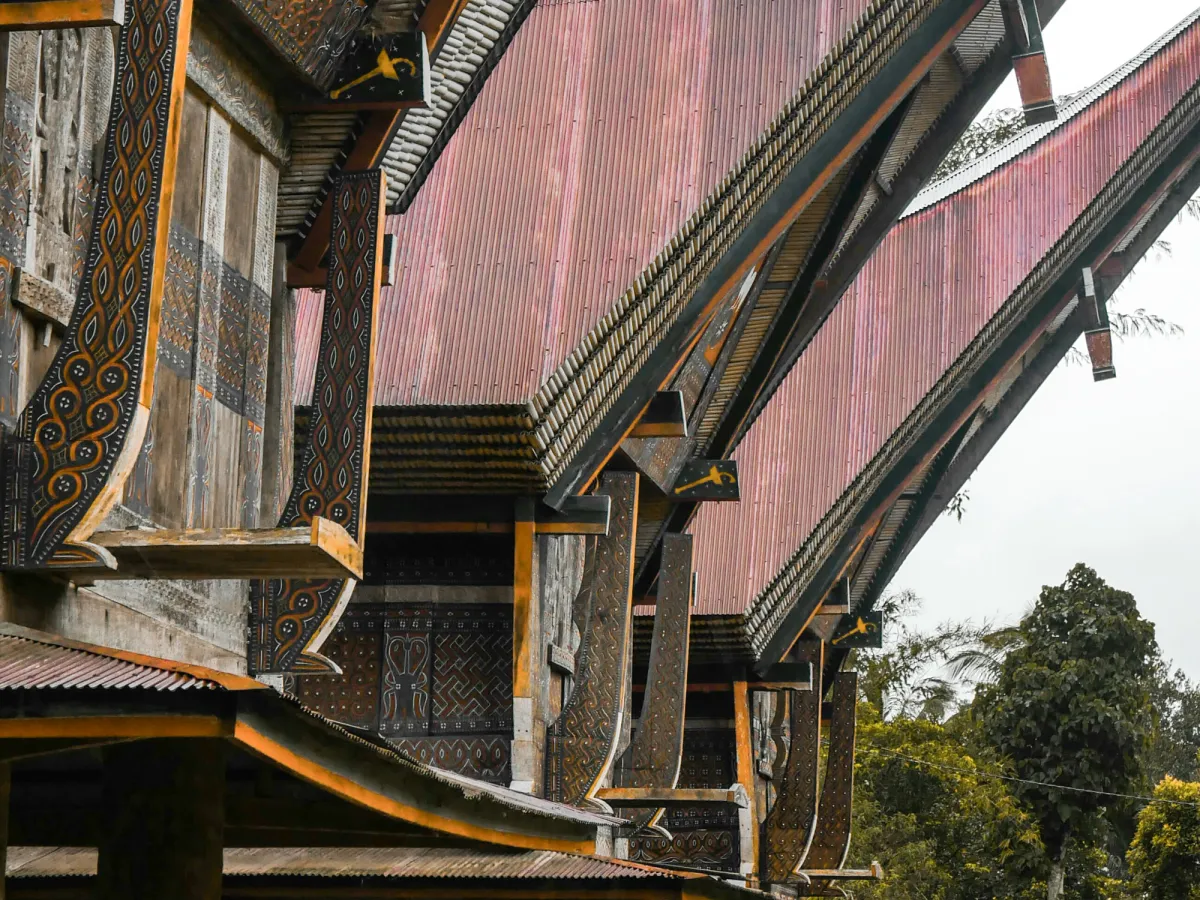
Toraja calls to mind striking, local architecture. Its traditional houses, the tongkonan are built on stilts; their walls are made of intricately carved wooden panels, painted mostly in black and red. Crowning them are thick roofs of multi-layered, bamboo shingles, curving flamboyantly upwards towards the sky on both ends. Hung on the exterior columns are rows of buffalo horns from past death rites. The more horns, the higher the family’s prestige. Their effect is, truly, visceral.
As an outsider interested in history and anthropology, it is difficult to resist this heady mix of tribal magic and ancestral feasts, of palm wine with chieftains and caffeine at high altitudes. Torajans belong to one of the world’s last living megalithic civilisations. Everything about them—from language to history and on to their belief-system—is so, utterly different from what I’d grown up with in my parts of Indonesia. I know London or Paris far more intimately than Toraja.
That said, I have now begun a friendly acquaintance, so to speak, with Rantepao—a small town of 40,000 people and the capital of North Toraja. Not quite a destination in its own right, it is more of a convenient base from where one might explore northern Toraja. For those unaccustomed to remote wilderness, the town offers rare amenities.
Its main strip is home to Café Aras, a former antiques shop and now something of an institution among tourists. Further south is Tori Coffee, more contemporary in style and owned by Toraja’s only certified, coffee Q Grader. Across the river Sadang on the edge of Rantepao is The Santai, a Spanish-owned boutique hotel where I usually stay while in town. Crucially for me, its restaurant is one of the few establishments to serve imported wine. A more recent discovery is nearby Angkringan, a charming, locally run café on the banks of the river and Toraja’s take on alternative, youth culture.
In the outskirts of the city are also some of the region’s most historic settlements, some in the running for the UNESCO World Heritage List. The most complete of these is the ancient compound of Ke’te Kesu’. It is the ancestral seat of one of the oldest noble lineages in North Toraja, going back over thirty generations. It consists of six tongkonan, with granaries and their own ceremonial ground. The latter is surrounded by a stone circle of twenty megaliths, still in active use. Although crowded during high season, few tourists seem to venture to the back of the settlement, where you find mysterious, cliff-side burial grounds. Skulls and bones are arranged on hanging platforms and inside caves in a way that harks back to prehistoric times.
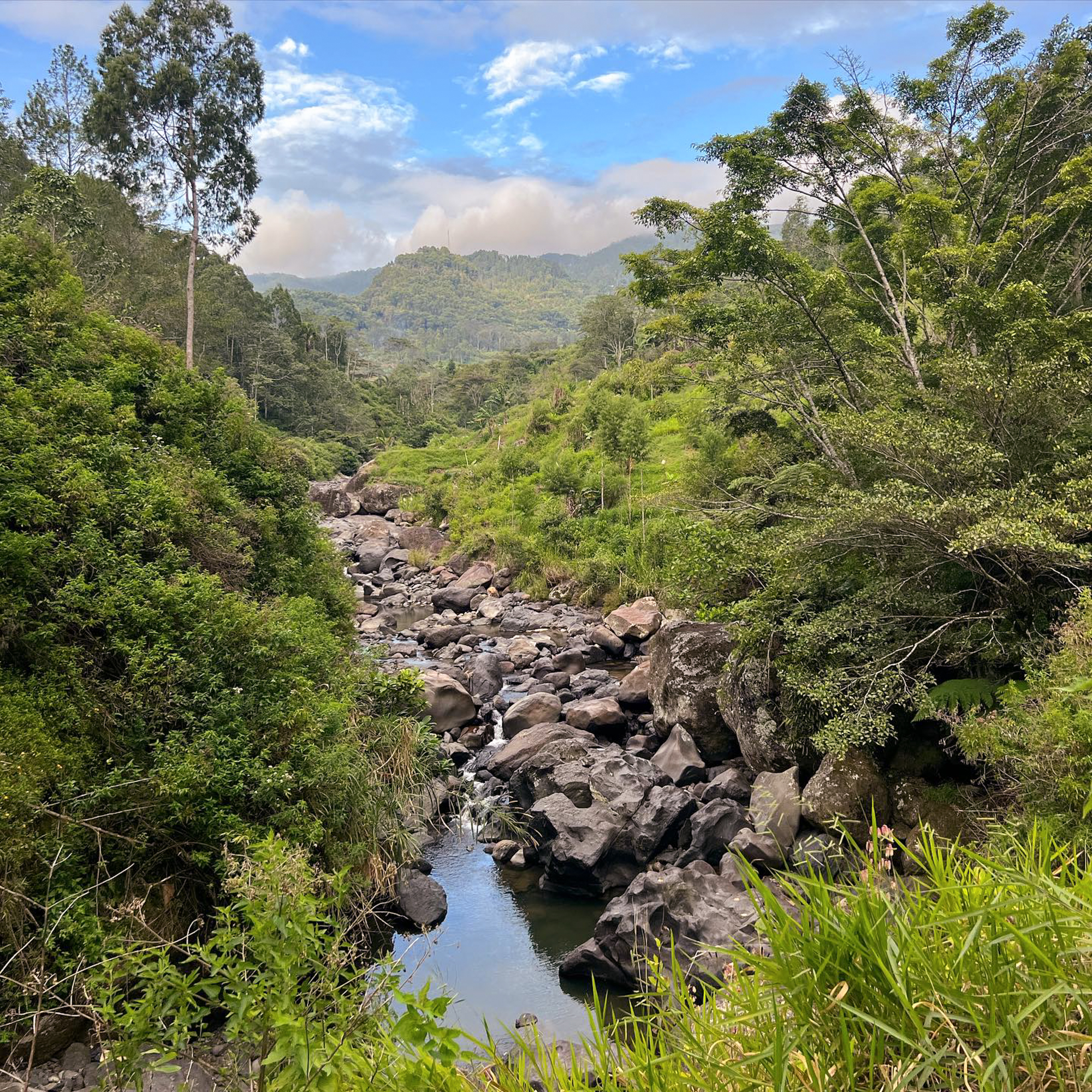
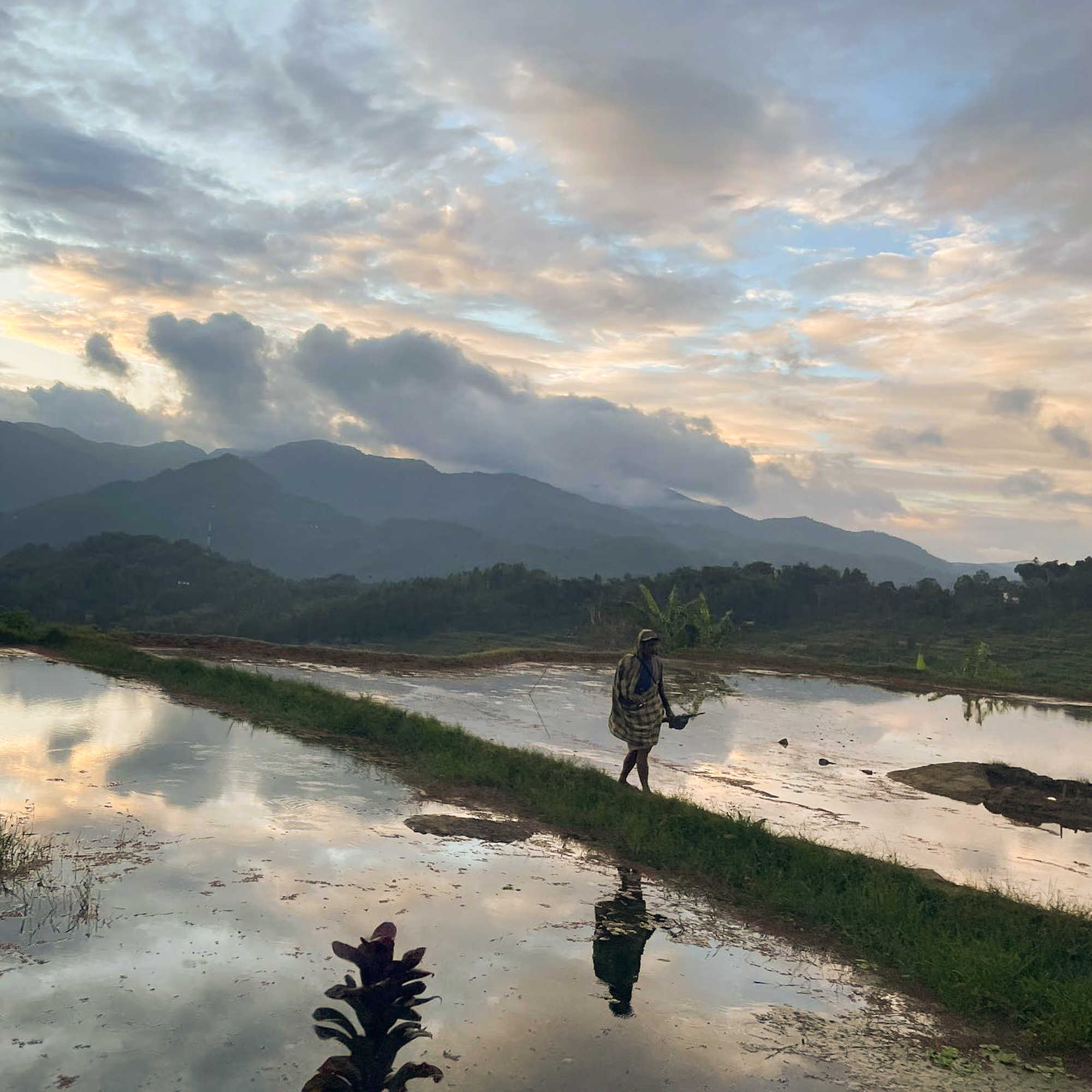
For me, though, the real joy of Toraja lies in its highlands and rural villages. That afternoon, I travel from Sapan to the nearby village of Batumonga to meet up with Dinny Jusuf. An old family friend, she is married to a nobleman from the local chiefly family. She is also the visionary founder of TORAJAMELO, a social enterprise that is empowering thousands of Torajan and Indonesian textile weavers—by tradition, almost always women. Amid rural flight to the cities and overseas, at times involving human trafficking, TORAJAMELO gives women the option to remain and work in their villages. The brand collaborates with Indonesia’s leading young designers to adapt traditional textiles for contemporary life and fashion.
We meet up for a country walk, following one of the old trails around Batumonga. After visiting their family’s ancestral tongkonan, we drop by the workshop of a local blacksmith. With his apprentices, he shows us how agricultural tools are made in the traditional way. Dinny and I then meander down a shaded footpath. Walking through an arcade of bamboo groves, we finally emerge into sunlight. Here lies a beautiful, abandoned house, overgrown with moss and shrubs. It is perched on the incline of a hill, overlooking the valley and rice terraces below. The soft, undulating foothills seem pinned safely to the ground by boulders—unyielding and as old as time. Without any of us noticing, like cotton threads, patches of white fog gather beneath our feet. For a brief moment, we walk—as the divine ancestors did—above the clouds of Toraja.
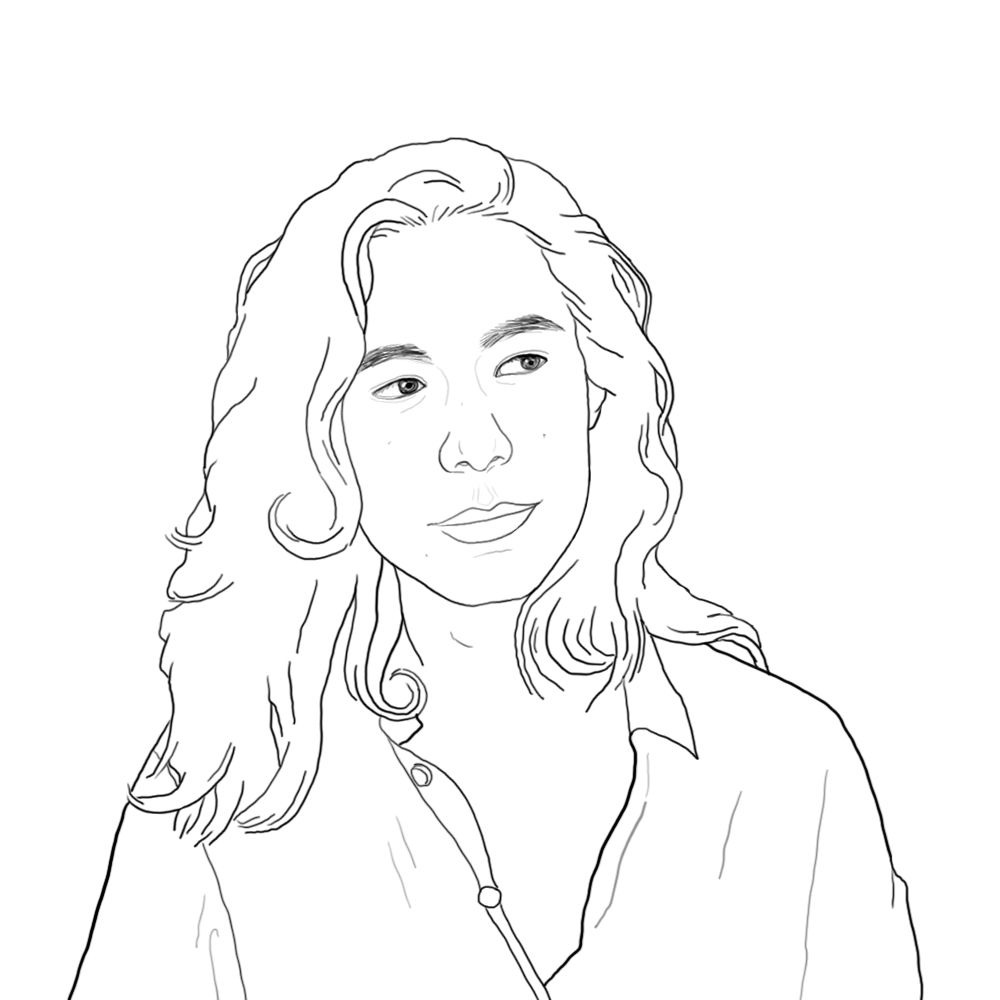
Adi Hong-Tan
The only thing more fabulous than Adi’s stories is possibly his hair – though really, it’s a close call. While he keeps close to his Indonesian roots, spending a few months a year in Bali, Adi has become so fully ensconced in life in Europe that you’re likelier to see him rubbing elbows with the glitterati in Venice or Athens than luxuriating by a pool in Southeast Asia. Charming, cheeky and undeniably charismatic, this writer has a way with words and a way with people. Let Adi regale you with tales of intimate suppers, thumping parties and trips you could only dream of.